
Production and sale of grain cleaning equipment worldwide
Grow More, Earn More – How Metra’s Technology Fuels Farm Expansion & Higher Margins
18 February 2026
Today’s farmers are under constant pressure to grow — not just crops, but their businesses. In the United States and Canada, grain producers are increasingly looking to expand acreage, add new crop types, or move into higher-value markets to stay competitive. But expansion only works if post-harvest infrastructure can keep up with new demands for quality, consistency, and volume. This is where advanced grain cleaning technology — especially the grain color sorter — becomes a true growth catalyst. This article shows how METRA’s separators and optical color sorters enable farmers to diversify crops, scale production, and increase profit margins with confidence.
Versatility That Encourages New Crops
One of the biggest barriers to diversification is uncertainty: Can I actually clean this crop to market standards?
Metra’s answer is simple: if you can grow it, Metra can clean it.
Metra grain cleaning systems are designed to handle virtually any grain or seed — from staple crops like wheat and corn to niche and specialty crops such as lentils, peas, teff, hemp, or sorghum. Fast changeover between crops allows farmers to rotate or experiment without investing in separate machines for each commodity. This flexibility dramatically reduces the risk of trying new, higher-margin crops.
Pulses: Peas and Lentils
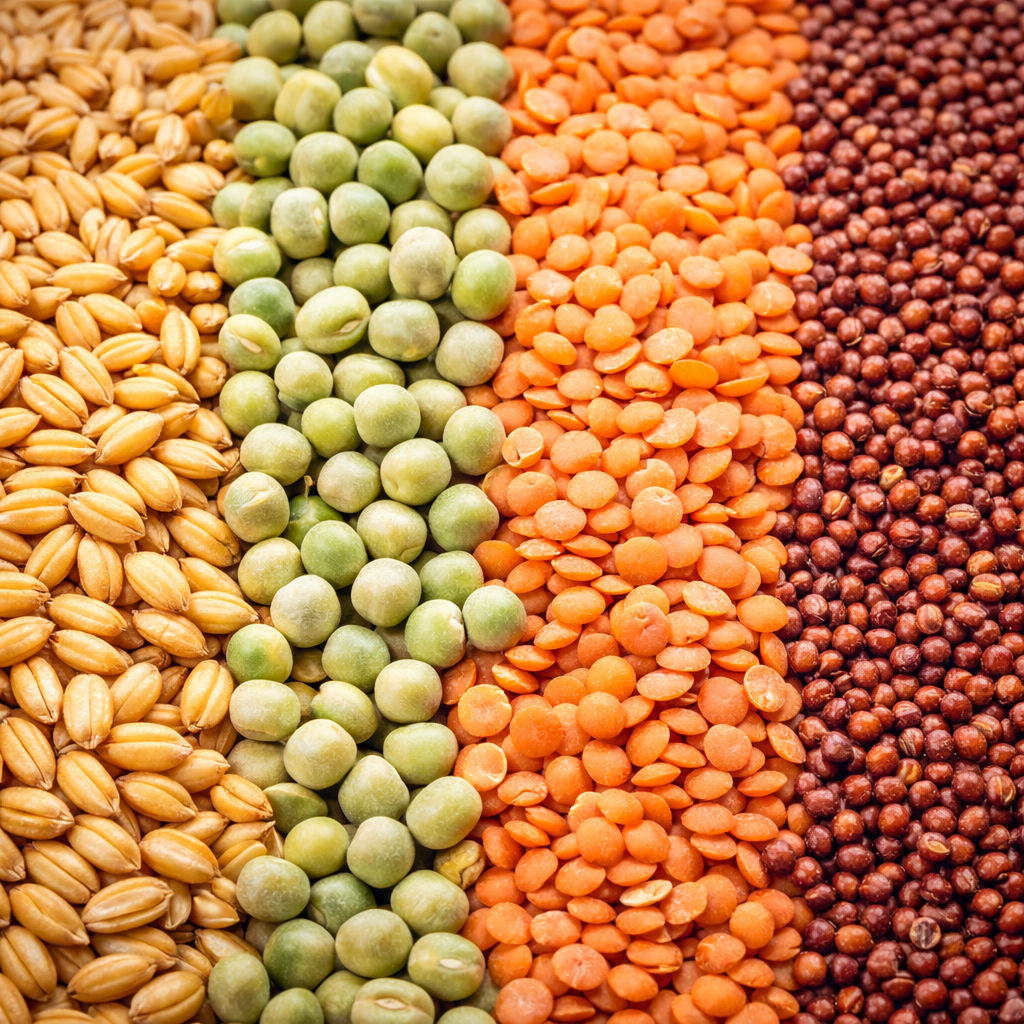
Pulses are attractive because of strong export demand and premium pricing, but they come with strict quality requirements. Split kernels, off-color seeds, and foreign material can quickly downgrade a load. Metra grain color sorters remove discolored and damaged lentils or peas with high precision, allowing farmers to meet food-grade and export standards. As a result, crops that once felt “too risky” become profitable additions to the rotation.
Organic Crops
Organic farmers face a different challenge: without chemical herbicides, harvested grain often contains more weed seeds and contaminants. Mechanical cleaning becomes essential to maintain certification purity. Metra technology allows organic growers to expand acreage confidently, knowing they can mechanically remove weeds and impurities across multiple crops. As more farmers transition to organic production, demand for versatile grain cleaners continues to rise — and those with the right equipment are best positioned to grow.
Specialty and “Super Grains”
Consumer demand for gluten-free, ancient, and specialty grains such as quinoa, teff, and sorghum continues to grow. These crops often have unique sizes, densities, and color characteristics that standard cleaners struggle with. Metra’s combination of aerodynamic separation and optical color sorting ensures even unfamiliar grains can be cleaned to market specifications, opening doors to high-value niche markets.
Bottom line: versatility lowers the risk of diversification. Farmers gain multiple income streams and a more resilient business model — without multiplying equipment costs.
Scaling Up Production with Modern Equipment
Expanding acreage or yields only pays off if processing capacity keeps pace. Many growth plans fail not in the field, but after harvest.
High Throughput and Speed
Metra systems are designed for high-volume operations. Combined aerodynamic cleaners and color sorters can process large quantities of grain quickly, allowing farmers to harvest more without weeks of post-harvest delays. Producers report dramatic increases in processing speed after upgrading — in some cases, multiple-fold improvements — which makes it realistic to handle more acres or larger contracts.
Replacing Outdated Cleaning Lines
Older grain cleaning setups often rely on multiple slow, maintenance-heavy machines. These legacy lines become bottlenecks as operations grow. Metra systems consolidate several functions into a compact, efficient setup. A modern aerodynamic cleaner paired with a color sorter can replace what previously required three or four separate machines: pre-cleaning, sizing, destoning, and even manual defect removal. This simplifies the grain handling line, reduces maintenance, and frees up space.
Minimized Downtime
Downtime is one of the biggest threats during expansion. Metra’s aerodynamic units feature no moving screens or complex mechanical assemblies, reducing wear and failure points. Optical sorters offer stable operation and monitoring features that help prevent unexpected shutdowns. During peak harvest, when trucks are lined up and timing is critical, reliability gives farmers the confidence to scale production or even process grain for neighboring farms.
Real-world impact: growers who replaced worn-out cleaners with Metra equipment commonly report doubling or tripling throughput almost immediately — a direct enabler of business growth.
Precision Sorting Unlocks New Markets
Expansion is not only about volume; it is also about where and how grain can be sold. This is where the grain color sorter plays a decisive role.
Meeting Food-Grade and Export Standards
Many premium markets — food-grade oats, malting barley, export wheat — demand extremely clean samples. Even a small percentage of discolored kernels, toxin-affected grain, or foreign seeds can disqualify a load. Metra optical color sorters use advanced imaging technology to detect and remove defects such as ergot bodies, bleached kernels, or visually damaged grain. Tasks that were once nearly impossible with traditional equipment become achievable, allowing farmers to meet strict buyer specifications.
Higher Quality Means Higher Margins
Clean, uniform grain commands a premium. For example, oats that qualify for human cereal markets sell significantly higher than feed oats. Durum wheat upgraded by removing ergot or discolored kernels can move from a discounted grade to top grade. By expanding the range of markets a farmer can access, Metra technology directly increases profit per bushel.
Diversified Revenue Streams
Precision sorting also allows farmers to create multiple products from the same harvest. A sorghum grower might separate red and white varieties for different niche buyers. A corn producer could sort food-grade kernels for processors while directing lower-grade material to feed or ethanol markets. Instead of one price, farmers gain multiple revenue channels.
Result: precision sorting gives farmers the confidence to pursue premium markets they may have avoided in the past.
Increasing Profit Margins Through Value-Added Processing
True expansion succeeds when margins grow along with volume.
Less Waste, More Sellable Product
Metra’s precise calibration minimizes the loss of good grain. Older methods often discard edible kernels along with impurities, but modern systems maximize usable output. Over tens or hundreds of thousands of bushels, this difference translates directly into higher profit.
Lower Processing Costs per Bushel
Automation and energy-efficient design reduce labor and operating costs. One operator can manage large volumes, even during peak season. As production scales up, these efficiencies prevent margins from being eaten away by processing expenses.
Direct Sales and New Business Models
On-farm cleaning and sorting open the door to new business models. Farmers can sell directly to end users, clean and bag seed, or offer contract cleaning services to neighbors. By reducing reliance on middlemen, producers capture a larger share of the value chain.
Expansion Backed by Fast ROI
When farmers see that every additional acre cleaned with Metra technology generates strong returns, expansion becomes a calculated business decision rather than a gamble. Many operators report that improved efficiency and reduced waste allow them to handle backlog orders, fulfill larger contracts, and increase margins even as volume grows.
In short: Metra technology lets farmers do more with less — more output and revenue without proportional increases in cost.
Future-Ready Farming – Staying Competitive
Quality standards and buyer expectations continue to rise. Stricter toxin limits, traceability requirements, and demand for premium products are becoming the norm. Optical color sorting is already standard in food and seed processing, and farms that adopt this technology early gain a lasting competitive edge. Some producers also explore value-added agriculture programs or equipment innovation incentives to support expansion. Investing in advanced cleaning today prepares farms not just for current opportunities, but for the demands of tomorrow.
Conclusion
Metra’s grain cleaning technology helps farmers grow more by enabling diversification and scalable production — and earn more by unlocking premium markets and higher margins. Versatility removes the fear of new crops. Throughput eliminates bottlenecks. Precision sorting opens doors to food-grade and export channels. Together, these capabilities turn expansion into a controlled, profitable strategy. With the right technology in place, ambitious growth becomes a confident step forward rather than a risky leap.
Expand Your Horizons
Thinking about upgrading your processing line or adding new crops?
Contact Metra’s experts for a free consultation and see how grain color sorting and advanced cleaning can help you expand production and increase margins.
- Request a demo of Metra grain color sorters
- Upgrade your grain processing line
- Calculate how much additional margin diversification could bring to your farm
It’s time to grow beyond limits — let Metra help you plant the seeds of your next success.
📞 T: +1 336 612-3077
✉️ Email: info@metragraincleaner.com