Production and sale of grain cleaning equipment worldwide
Grain Cleaning Before Storage: How to Protect Your Harvest, Your Income, and Your Market Control
23 January 2026




After harvest, many farmers face the same temptation:
store the grain immediately and clean it later – just before selling.
At first glance, this looks like a time- and cost-saving decision.
In reality, it is one of the most expensive risks in grain farming.
Cleaning grain before storage is not an “extra step” or a formality.
It is a protection of yield, quality, and income that cannot be replaced by drying, ventilation, or hope.
Let’s break it down clearly and practically.
What really goes into storage along with grain
After harvest, grain is never perfectly clean. The grain mass always contains:
- straw and plant residues
- chaff and dust
- weed seeds
- broken, lightweight, and damaged kernels
These impurities are the main trigger of storage problems.
The main risks of storing uncleaned grain
1. Self-Heating and Mold
Fine particles and dust accumulate inside the grain bulk and restrict airflow.
As a result:
- moisture builds up
- temperature rises
- localized hot spots appear
These hot spots are where mold and spoilage begin.
The danger is that the process often remains invisible until quality has already been lost.
2. Insects and infestation
Dust and impurities create ideal conditions for insects and mites.
If grain is not cleaned, pests spread rapidly through the entire batch, and stopping the process often requires full reprocessing.
3. Mycotoxins – the hidden threat
Mold is not just a visual defect. It produces mycotoxins that:
- make grain unsuitable for food or feed
- lead to rejection at delivery
- can completely eliminate market value
It is critical to understand: drying does not remove mycotoxins.
The only effective solution is removing infected and lightweight kernels during cleaning.
4. Lower prices and rejected loads
Uncleaned grain almost always means:
- higher dockage
- downgraded quality class
- price deductions
- additional cleaning requirements
In many cases, the load is simply rejected, forcing the farmer to pay again for cleaning and transport.
What grain cleaning before storage actually delivers
Safe and stable storage
Clean grain:
- allows uniform airflow
- cools evenly
- does not create moisture pockets
It can be stored safely for months without quality loss.
Lower drying costs
Clean grain:
- dries faster
- requires lower temperatures
- consumes less fuel
This is a direct saving of energy, time, and money.
Higher selling price
Removing impurities and lightweight fractions:
- improves grain class
- reduces rejection risk
- allows confident sales at higher prices
Control and independence
Farmers with clean grain:
- are less dependent on elevators
- choose the optimal selling moment
- can form batches for different markets
The economics: a simple and honest example
Why we use a Fusarium (vomitoxin) example
We intentionally use Fusarium / DON (vomitoxin) as a case example because, unlike dockage, mycotoxin discounts are transparent and clearly calculated in dollars per ppm at many U.S. elevators.
Dockage in the U.S. works differently: elevators usually deduct weight, not a fixed dollar penalty.
For example, 10% dockage simply means you get paid for 900 bushels instead of 1,000, and since grain prices vary by commodity and market, it becomes difficult to show a clean, universal calculation.
Mycotoxin penalties, however, are much easier to model and explain, especially to farmers making storage decisions.
Real case example (Bushels & Dollars)
Harvest volume: 30,000 bushels
Mycotoxin level (Fusarium / DON): 5 ppm
Elevator tolerance: 2 ppm
Excess contamination: 3 ppm
Elevator discount policy:
$0.50 per bushel for each 1 ppm above tolerance
What this means in real money
- Excess DON: 3 ppm
- Discount per bushel: $1.50
- Total volume: 30,000 bushels
$1.50 × 30,000 bu = $45,000 in direct losses
$45,000 lost on a single season — simply because the grain was stored without proper cleaning.
Why this loss happens during storage, not at delivery
It is critical to understand one key point:
Mycotoxins are not created at the elevator – they develop during storage.
Fusarium-infected kernels are typically:
- lightweight
- damaged
- partially hollow
These kernels concentrate:
- moisture
- heat
- fungal spores
When grain is stored without proper cleaning, these infected kernels remain in the bulk and become active sources of toxin growth, especially during long-term storage.
Drying alone does not remove Fusarium or DON.
Once toxins are present, the discount is unavoidable.
How proper grain cleaning changes the outcome
Aerodynamic grain cleaning before storage allows farmers to:
- remove lightweight and infected kernels
- significantly reduce the overall DON concentration
- stabilize grain during storage
- avoid ppm-based discounts at delivery
In many documented cases, removing only 5–8% of the light fraction before storage is enough to bring DON levels below elevator tolerance.
That difference alone can mean:
- selling grain at full price
- instead of losing tens of thousands of dollars
Why this matters for farmers
This example shows why grain cleaning is not about appearance or formal quality grades.
It is about risk management.
You may never see mold.
You may never smell spoilage.
But the elevator test will show ppm numbers — and the discount will be immediate.
How METRA machines address this risk
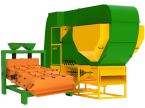
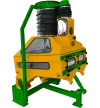
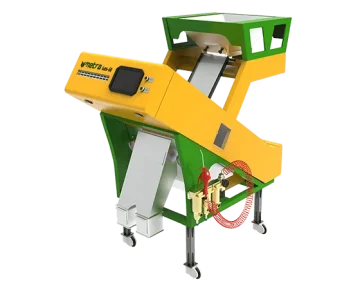
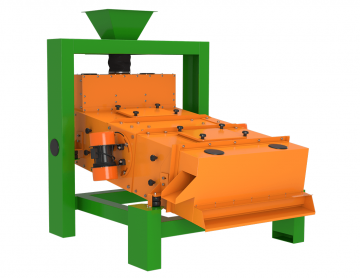
Grain cleaning equipment from METRA is specifically designed to remove:
- lightweight Fusarium-infected kernels
- dust and fine fractions where toxins concentrate
- unstable material that accelerates spoilage during storage
By cleaning grain before storage, METRA machines help farmers:
- reduce mycotoxin risk
- protect grain value
- avoid ppm-based price penalties
- maintain full control over grain quality until sale
Key takeaway from this case
You don’t just lose money because the elevator discounts you.
You lose money because contaminated grain was stored uncleaned.
Grain cleaning before storage is not an expense – it is insurance against predictable, measurable financial loss.
Why the right cleaning technology matters
To achieve this economic effect, cleaning must:
- efficiently remove dust and lightweight fractions
- eliminate damaged and problematic kernels
- preserve full-value grain
- work fast during harvest season
That is why more and more farmers choose aerodynamic grain cleaning, not only traditional screen machines.
Practical recommendation: METRA equipment
The equipment produced by METRA is designed specifically for farmers who want to protect grain during storage, not just clean it before sale.
What METRA machines deliver:
- effective removal of dust and lightweight fractions
- reduced risk of mold and mycotoxins
- grain prepared specifically for storage
- low energy consumption
- high productivity
- fast return on investment through preserved yield
METRA machines allow farmers to clean grain immediately after harvest, store it safely, and maintain full quality control until sale.
The key takeaway for farmers
Grain cleaning before storage is not a cost.
It is insurance for your harvest, your income, and your peace of mind.
You either:
- clean grain on time and earn more
- or pay later for mold, pests, and price deductions
Experience shows clearly: the second option is always more expensive.