Production and sale of grain cleaning equipment worldwide
Grain Cleaner Comparison by Type: Which System Is Right for Your Farm?
17 April 2026

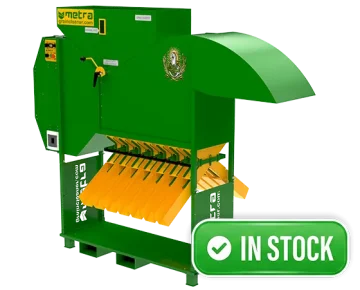


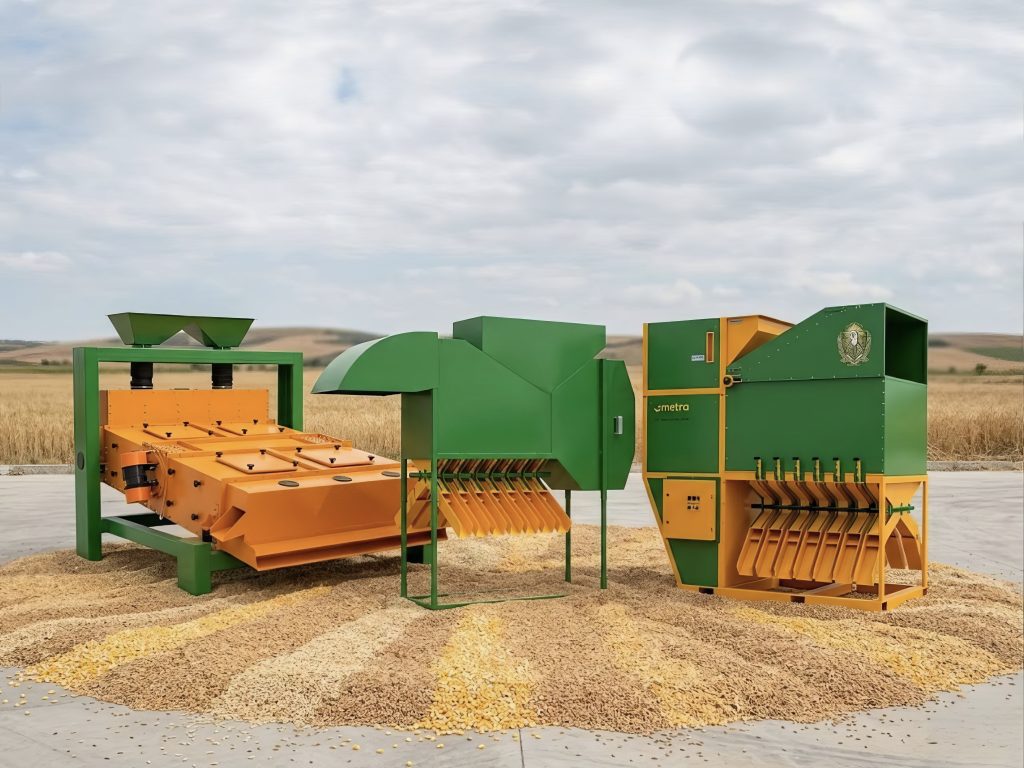
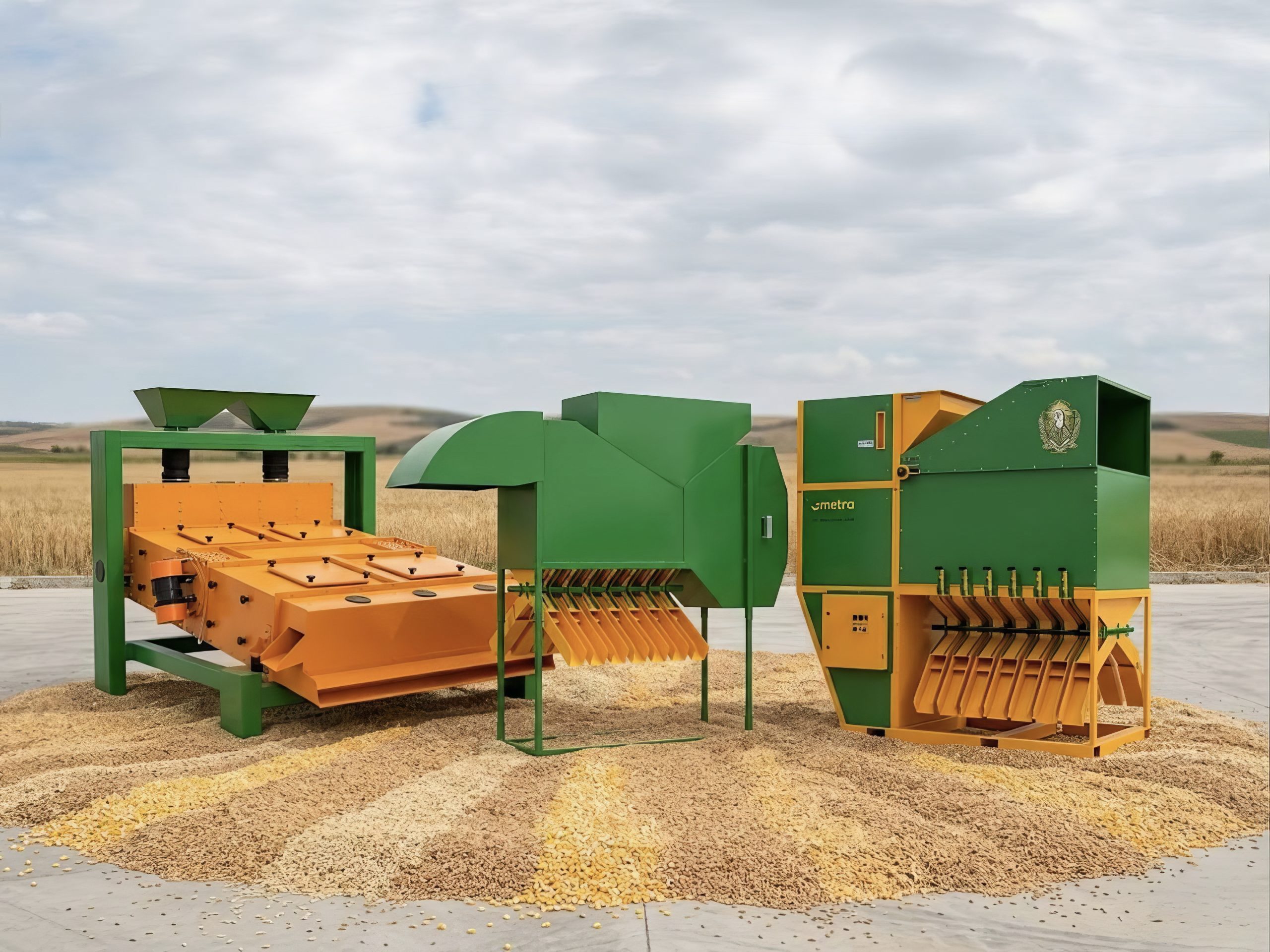
Choosing the right grain cleaner is not just about capacity. The real question is what exactly you need the machine to do: remove large foreign material, pull out dust and light impurities, separate by size, sort by density, reject discolored kernels, or build a complete multi-stage cleaning line. That is why comparing grain cleaners by type is far more useful than comparing machines by model number alone. Metra’s lineup itself reflects this logic, with separate categories for pre-cleaning, aerodynamic cleaning, vibration cleaning, optical color sorting, aspirators, destoners, and integrated systems.
A farm handling grain straight from the field usually has very different needs from a processor preparing grain for seed, premium food markets, or stricter downstream specifications. In one case, the priority may be throughput and removal of large trash. In another, it may be accurate separation of infected, lightweight, moldy, or visually defective kernels. The best grain cleaning setup starts with understanding which type of separation matters most in your operation.
Metra grain cleaning systems are built around patented technology designed to help farms improve grain quality with low maintenance requirements, flexible machine configurations, and practical mobility for changing operational needs. For many operations, the right cleaner can also support payback in one season by helping recover more value from grain that would otherwise be downgraded, blended, or sold at a discount.
1. Pre-cleaners: best for first-stage cleaning
Pre-cleaners are designed for the first pass. Their role is to remove larger foreign material and reduce the load on the rest of the system. Metra pre-cleaners are suitable for cereals, legumes, vegetable and gourd seeds, and bulk mixtures, with capacities ranging from 400 to 2,000 bushels per hour. In practical terms, this makes them a strong option when incoming grain contains stems, weeds, stones, oversized debris, or a large amount of non-product material that should be removed before fine cleaning begins.
A pre-cleaner is usually the right choice when your main bottleneck is dirty incoming material and you want to improve the efficiency of the next cleaning stage. It is not normally the final answer for premium-quality separation, but it is often the machine that makes the rest of the line work better, faster, and with less wear. That is why Metra offers combined systems such as GPC+ADS and SGC+ADS for operations that need a more complete cleaning sequence.
2. Aerodynamic grain cleaners: best for density-based cleaning and versatile primary processing
Aerodynamic grain cleaners are one of Metra’s core equipment categories. These machines sort and calibrate grain based on relative density, remove both light and heavy impurities, and help reduce VOM, FUS, and other fungi-related contamination. With capacities ranging from roughly 200 to 8,000 bushels per hour, Metra aerodynamic cleaners are suitable for a wide range of farm sizes and grain volumes.
This type is usually the better fit when you want more than rough pre-cleaning. Aerodynamic separation is useful when the value lies in separating full grain from lightweight, damaged, or lower-value fractions. Metra aerodynamic systems can divide material into cash grain, feed, and ideal seed, helping farmers increase saleable quality and recover more value from each load.
Unlike screen-based systems, aerodynamic cleaners do not rely on sieves, which reduces setup time and simplifies operation across different crops.
For operations concerned with dust management, Metra offers aerodynamic grain cleaners with cyclone dust collectors. These models use laminar airflow, offer capacities up to 8,000 bu/h, and collect dust and small particles through the cyclone system rather than leaving operators with extra cleanup around the machine. They are also designed for fast commodity changeover and low-maintenance operation.
Models with cyclone dust collectors (CDC) create a closed dust-control loop, significantly reducing airborne particles and cleanup time.
3. Vibration grain cleaners: best for screen-based sizing and standard cleaning
Vibration grain cleaners rely on vibration and screens to separate grain and seed by size while removing large and small impurities and dust. Metra VDSC cleaners are suitable for both pre-cleaning and cleaning, with capacities ranging from 400 to 2,000 bushels per hour, or approximately 10 to 50 tons per hour. The double-screen design helps improve cleaning results.
A vibration grain cleaner is often the logical option when screen-based grading is central to the job. If you need consistent separation by size and want a familiar, mechanically intuitive cleaning process for cereals, oilseeds, beans, or similar materials, vibration cleaning is often easier to understand operationally than more specialized finishing equipment. It is especially useful when the problem is not visual defects by color, but physical differences in size and the need to remove coarse and fine impurities efficiently.
In practical terms, VDSC-type equipment works best when size separation is the primary requirement, not density or weight differences.
4. Optical color sorters: best for premium finishing and visual defect removal
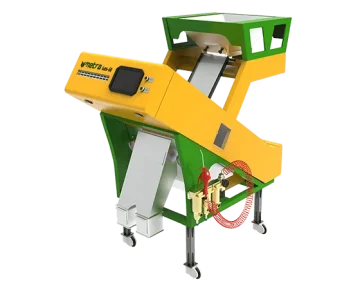
Optical color sorters solve a different problem entirely. They do not focus on rough trash removal or basic size grading; they focus on what the camera sees. Metra color sorters separate grain by color and remove discolored, infected, or foreign grain. This makes them one of the best solutions for ergot and other visually identifiable fungal issues, with capacities ranging from 40 to 800 bushels per hour.
This makes optical color sorters the better choice when the market rewards appearance, purity, and strict defect rejection. If a buyer penalizes ergot, discolored kernels, or visible contamination, a color sorter can be the difference between an ordinary cleanout and a premium result. For seed processors and specialty crop operations, that distinction can matter more than raw throughput alone. Metra’s 6AS range also spans multiple sizes, which gives flexibility depending on the desired production volume.
5. Air recycling aspirators: best for dust and light impurities
Air recycling aspirators are auxiliary machines, but they are far from minor. Metra ARC aspirators are designed to remove light impurities and dust from grain mass using a built-in fan and air recirculation system. With capacities ranging from 400 to 2,800 bu/h, they support cleaner operation with reduced dust emission.
An aspirator is the right choice when the biggest issue is lightweight material: dust, husks, chaff, and similar fractions. It is also a useful addition when the goal is not replacing the main cleaner, but improving overall plant cleanliness and final grain presentation. In many setups, it works best as part of a broader system rather than as the only step in the process.
Air recycling aspirators are often used together with primary cleaning systems to improve final grain quality and reduce dust load.
6. Destoners and gravity separators: best when density differences remain after standard cleaning
Some contaminants are simply too difficult to remove well with aspiration or screening alone. That is where destoners and gravity separators come in. Metra gravity separators are designed for dry bulk materials that are uniform in size but differ in mass, making them ideal when air aspiration and screening reach their limits.
Gravity separators are designed to remove damaged, immature, and low-density kernels that cannot be separated by air or screens alone.
So when should you choose this type? When your product is already fairly uniform in size, but you still need to separate sound grain from material that differs by weight or density. It is also the right stage when stones or heavy impurities remain a serious problem. In other words, gravity separation is less about first cleaning and more about final refinement where a standard primary cleaner can no longer do enough on its own.
7. Grain cleaner kits: best when one machine is not enough
No single machine handles every contamination type effectively. That’s why multi-stage systems often deliver better results.
Metra offers multiple kits, including VDSC+ARC, SGC+ADS, GPC+ADS, and 6AS+ADS, because real-world grain cleaning often works best as a sequence rather than a standalone step. For example, in highly contaminated material, especially small seeds, an aerodynamic separator may need support from a pre-cleaner to achieve high-quality cleaning and grain calibration.
That point matters for buyers. If you are comparing grain cleaners only by asking “Which single machine is best?”, you may be asking the wrong question. The better question is whether your grain needs one separation principle or several. Farms with heavy initial contamination, specialty crops, tighter seed requirements, or premium sales channels often get better results from a staged line than from a one-machine compromise.
How to choose the right type for your farm
If your grain arrives with a lot of coarse trash, start with a pre-cleaner. If your priority is primary cleaning with separation by relative density, focus on aerodynamic grain cleaners. If you need screen-based grading by size, vibration grain cleaners make more sense. If the biggest losses come from visual defects such as discolored or infected kernels, an optical color sorter is the stronger investment. If dust and light impurities are the pain point, add an air recycling aspirator. If the remaining contamination differs mostly by weight rather than size, look at a gravity separator or destoner.
The best grain cleaning system is not the most complex – it’s the one that matches your contamination profile and your end goal. For many farms, that means building the right sequence: pre-cleaning first, primary cleaning second, and precision finishing only where the added value justifies it. That is the practical way to compare grain cleaning equipment by type and avoid overbuying, underbuying, or solving the wrong problem with the wrong machine.
📞 T: +1 336 612-3077
✉️ Email: info@metragraincleaner.com