



Production and sale of grain cleaning equipment worldwide
Farm Roundup | October 1–15, 2025
15 October 2025
Similar Equipment
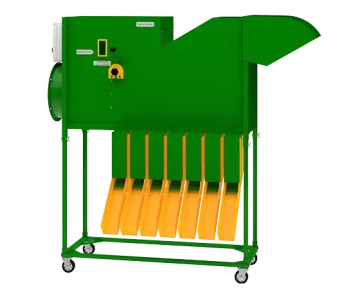
ADS-200e
Learn more

SGC-400
Learn more

SGC-400-H
Learn more

6AS-68
Learn more
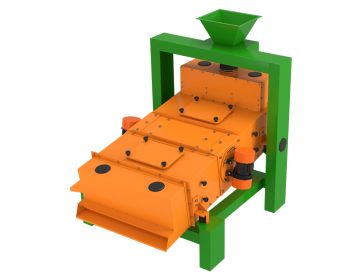
VDSC-400
Learn more

6AS-68L Belt
Learn more

ADS-200
Learn more

GPC-400
Learn more

ADS-200-CDC
Learn more
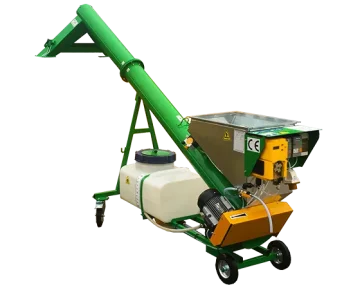
STM-120
Learn more
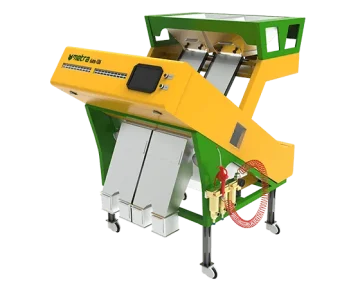
6AS-136
Learn more

ADS-400
Learn more

ADS-400-CDC
Learn more

ADS-400GM-CDC
Learn more
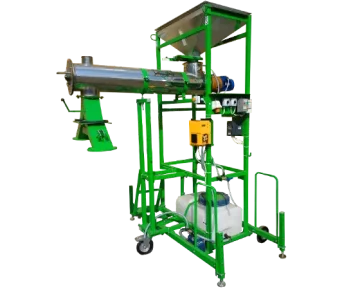
STM-200
Learn more

GPC-2000
Learn more
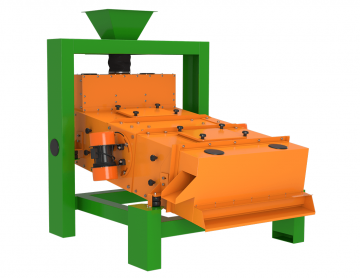
VDSC-800
Learn more

ADS-600
Learn more

ADS-600-CDC
Learn more

ADS-800-CDC
Learn more

Hi! Here is the ag news not to be missed from the last two weeks. Recent weeks have brought U.S. farmers a wave of major developments—from new tariffs and rising trade tensions with China to promises of federal aid and record global harvests. These shifts are reshaping the economic reality of American agriculture, where policy, prices, and climate are more connected than ever. Below is a roundup of the most relevant news shaping markets, income, and strategy for U.S. farmers.
Trump to boost China tariffs 100%, Xi meeting in jeopardy
https://www.agri-pulse.com/articles/23594-trump-to-boost-china-tariffs-100-xi-meeting-in-jeopardy
President Trump announced an additional 100% tariff on Chinese imports starting November 1 in response to China’s new restrictions on exporting key minerals. A planned meeting with President Xi later this month is now uncertain due to rising trade tensions.
Why read this: This move could significantly affect agricultural exports and global markets that are crucial for American farmers.
Trump considering at least $10 billion for farmer aid
President Trump is considering a farm aid program worth between $10 billion and $14 billion, using tariff revenue to support soybean producers and other agricultural sectors. Treasury Secretary Scott Bessent said the official announcement is expected Tuesday and noted that the 2025 soybean harvest is so large that storage space is running short.
Why read this: The proposed financial support could help stabilize farmers’ incomes amid ongoing trade tensions with China.
Bessent teases farm assistance announcement next week
U.S. Treasury Secretary Scott Bessent said a “substantial support package” for farmers could be announced as early as Tuesday to address trade tensions with China. Soybean farmers are under particular pressure—facing income declines amid a record harvest and a lack of new orders.
Why read this: The prospect of federal aid could shift farmers’ financial outlook and influence trade support policies.
Trump to unveil farm bailout needed because his tariffs led China to stop buying American products
President Trump is preparing a new aid package for farmers, expected to be announced soon, to offset losses from his tariff policy against China. The trade restrictions have already pushed China to completely halt purchases of U.S. products, putting massive pressure on the agricultural sector.
Why read this: The planned aid could reshape the financial outlook for farmers hit hardest by the loss of a key export market.
American soybean farmers face financial crisis as China trade dispute threatens livelihoods
Because of the trade dispute with China, soybean farmers are suffering major financial losses—revenues are falling while storage and logistics costs continue to rise. Without a stable export market, many farms are on the brink of survival.
Why read this: The financial strain caused by the trade conflict could influence farmers’ decisions about crops, storage, and marketing strategies.
Trump calls China soybean cuts ‘economically hostile’ act against American farmers nationwide
Trump called China’s decision to cut purchases of American soybeans an “economically hostile act,” saying it hurts farmers across all states. He promised a response and hinted at possible trade measures against China.
Why read this: Such statements signal potential changes in trade policy that could affect exports and farm income.
U.S. soybean farmers deserted by big buyer—China scrambles for other importers
China has stopped buying U.S. soybeans, pushing American producers to find new international buyers. Exports from Brazil and Argentina are rising, filling the gap left by U.S. suppliers.
Why read this: Losing the Chinese market means major changes in export strategy and potential financial challenges for soybean growers.
Trump predicts China would resume buying U.S. soybeans
https://www.farmprogress.com/farm-business/trump-predicts-china-would-resume-buying-u-s-soybeans
President Trump predicted that China would resume purchases of U.S. soybeans after his meeting with President Xi Jinping, potentially ending a months-long embargo. However, federal financial aid to farmers will be delayed until the government reopens.
Why read this: The reopening of the Chinese soybean market could have a major impact on export prospects and prices for American farmers.
Daybreak Oct. 9: Senators push to expand farm assistance
Senators from agricultural states plan to launch a new aid package for farmers in the coming months, which may include a bill to study fertilizer pricing. Chuck Grassley says that increasing annual sales of ethanol fuels could generate $25 billion in economic activity, with $10 billion driven by higher demand for corn.
Why read this: This initiative could reshape agricultural support programs and affect fertilizer prices—issues that directly impact farmers.
America’s soybean farmers face ‘Groundhog Day’ with murky biofuel policy
U.S. soybean farmers bedeviled by dried up trade flows, higher production costs and lower crop prices could use a robust market for domestic biofuel right about now, according to growers and processors dealing with a teetering farm economy. Despite the approval of 45Z in law, its full implementation can only begin in May 2026 due to delays and a lack of official clarification.
Why read this: Policy uncertainty surrounding biofuels directly affects demand for soybeans, a key crop for many American farmers.
Brazil’s soybean exports to hit record as U.S. out of market, Chinese demand strong
Brazil is on track to export 102.2 million tons of soybeans by the end of October—more than in all of 2023 or 2024—thanks to the absence of U.S. competition. In September, China imported 6.5 million tons from Brazil, accounting for 93% of its monthly shipments.
Why read this: This market shift shows the U.S. is losing its role as China’s top soybean supplier—farmers need to look for new buyers and strategies.
Argentina exchange raises wheat forecast to record, tying 23 million tons
Argentina’s grain exchange raised its wheat production forecast to a record 23 million tons, matching the previous all-time high. The revision came after improved weather and higher yields across key growing regions.
Why read this: This record harvest could intensify global wheat competition and influence prices that matter to U.S. producers.
Farmer aid reportedly delayed by government shutdown
https://www.agriculture.com/partners-farmer-aid-reportedly-delayed-by-gov-t-shutdown-11826357
Because of the government shutdown, farm aid payments under federal programs could be delayed for several weeks or even months. The delay affects both direct subsidies and approved compensation for losses that have not yet been distributed.
Why read this: Delayed federal support could tighten cash flow on farms and force changes in spending or credit plans.
Soybean farmers remain optimistic despite trade war
https://www.farmprogress.com/soybean/soybean-farmers-remain-optimistic-despite-trade-war
North Dakota cut soybean acreage by only 3% in 2025 despite the lack of Chinese orders, while in-state processing rose from 25% to 50% in less than 10 years. Farmers are relying on new crush plants, local feed markets, and potential export destinations such as Thailand, Indonesia, and Vietnam.
Why read this: The story shows how domestic processing and livestock expansion can help stabilize farm income even during trade conflicts.
Farmer sentiment rises despite worsening conditions
https://www.agri-pulse.com/articles/23573-farmer-sentiment-rises-despite-worsening-conditions
The Purdue/CME farmer sentiment index rose by one point in September despite a seven-point drop in current conditions ratings. The capital investment index fell by eight points, while 71% of farmers believe the country is moving in the “right direction.”
Why read this: Despite tough market conditions, farmers remain optimistic about policy support—a sign that could influence future agricultural policy and market programs.
U.S. trade talks may be cracking India’s opposition to GM crops
https://www.farmprogress.com/crops/u-s-trade-talks-may-be-cracking-india-s-opposition-to-gm-crops
U.S. soybean farmers struggling with weak exports, high production costs, and lower prices are looking to the domestic biofuel market for relief. Although the 45Z tax credit has been approved, full implementation may not begin until May 2026 due to delays and a lack of official guidance.
Why read this: Uncertainty in biofuel policy directly affects soybean demand—a key crop for many American farmers.
Research aims to boost crop photosynthetic efficiency beyond current 6% in corn
Researchers are working to boost corn’s photosynthetic efficiency beyond the current ~6% level to increase yields without expanding acreage. The projects include genetic and physiological modeling aimed at reaching 10% efficiency over the long term.
Why read this: Improving photosynthesis could significantly raise yield per acre—a key driver of farm profitability.
Newsom signs first-in-nation ban on ultraprocessed foods in schools
California Governor Gavin Newsom signed AB 1264, a law that bans ultra-processed foods in schools—starting July 1, 2029, with a full ban expected by 2035. The state’s Department of Health must identify “foods of concern” by mid-2028, and suppliers will be prohibited from selling them to schools after 2032.
Why read this: The law could shift demand for food ingredients, especially those used in highly processed products—something that matters to farmers and agricultural producers.
Every farmer should review this harvest safety checklist
https://www.agriculture.com/every-farmer-should-review-this-harvest-safety-checklist-11825930
Before harvest, check brakes, lights, grain truck height, and load security—they’re essential for keeping both equipment and people safe. The list also covers how to handle breakdowns or fires and how to organize quick emergency response in the field.
Why read this: A short safety checklist can help prevent accidents during the busy season and protect both your crop and your crew.
The road ahead looks challenging as global trade, politics, and market risks once again shape the profitability of American farms. Yet farmers continue to adapt—diversifying sales, expanding processing, and finding opportunity even amid uncertainty.
Thanks for reading! We’ll be back with more insights and updates in the next issue. Until then—stay sharp, stay ahead.