



Production and sale of grain cleaning equipment worldwide
Farm Roundup | August 15-31, 2025
1 September 2025
Similar Equipment
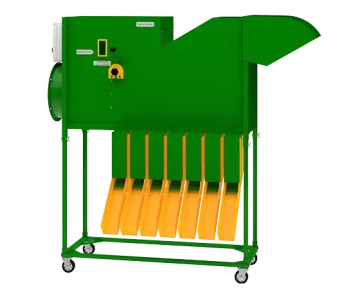
ADS-200e
Learn more

Set - SGC+ADS
Learn more

SGC-400-H
Learn more

6AS-68
Learn more

ADS-200
Learn more

ADS-200-CDC
Learn more

GPC-400
Learn more

SGC-400
Learn more
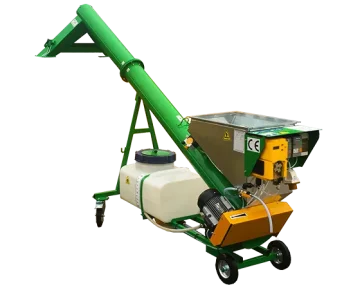
STM-120
Learn more
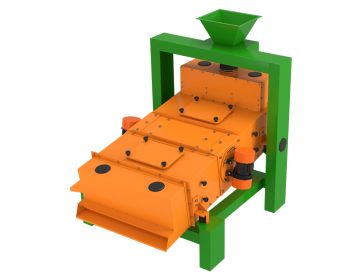
VDSC-400
Learn more

ADS-400
Learn more
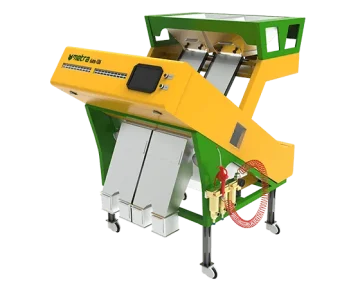
6AS-136
Learn more

ADS-400-CDC
Learn more

ADS-400GM-CDC
Learn more
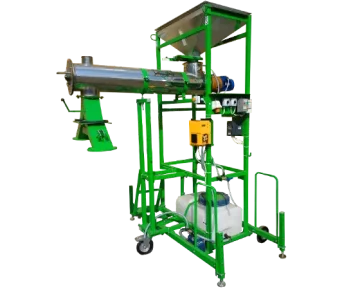
STM-200
Learn more

GPC-2000
Learn more
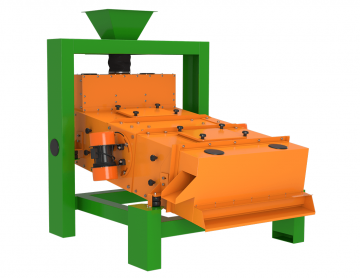
VDSC-800
Learn more

Hi! Here is the ag news not to be missed from the last two weeks. Short, sharp, and straight. Ignore endless scrolling through articles and keep control with timely decision-making by reading the digest.
ASA urges Trump to prioritize soybean purchases in US-China trade deal
https://www.hoosieragtoday.com/2025/08/27/asa-trump-soybeans-china
The ASA urged President Trump to remove retaliatory tariffs and include China’s soybean purchase commitments in a new trade deal, with the deadline extended to November 10. In the 2023/2024 marketing year, China bought $13.2 billion worth of U.S. soybeans—about 54% of U.S. exports—but is now shifting purchases to Brazil.
Why read this: Without renewed Chinese purchases, U.S. farmers risk losing a key export market and a share of income from the new crop.
Federal court strikes down Trump tariffs as illegal under federal law in appeals ruling
The federal appeals court ruled that most of Donald Trump’s tariffs were illegal under IEEPA, with a 7–4 decision; they will remain in effect until October 14 to allow for an appeal to the Supreme Court. By July, tariff revenues had reached $142 billion, more than double last year’s level.
Why read this: The decision could change trade conditions and directly affect farm sector profits.
USDA projects ag trade deficit will fall to $41.5 billion in 2026
USDA lowered its forecast for the agricultural trade deficit in fiscal year 2025 to $47 billion (down from $49.5 billion) and expects it to shrink to $41.5 billion in 2026, as imports fall more (from $220 billion to $210.5 billion) than exports (from $173 billion to $169 billion). Soybean exports are projected at $18.3 billion in 2026, compared to $21.5 billion in 2025 and $24.2 billion in 2024, while shipments to China could drop from $17 billion in 2025 to $9 billion in 2026—the lowest since 2007.
Why read this: The forecast shows how trade wars and declining Chinese purchases directly affect farm income and market structure.
Farmers feel fertilizer price squeeze as tariffs hit ag sector
The average effective tariff rate on farm inputs rose from 0.9% in 2017 to 12.2% in August 2025; for herbicides, insecticides, and other pesticides it exceeded 20%, while tractors and parts faced rates of 16% and 13% respectively. Fertilizers can account for over 30% of corn, wheat, and soybean producers’ costs, with nitrogen fertilizer prices up 10–15% from last year.
Why read this: Rising tariffs and fertilizer costs directly affect crop profitability and force farmers to rethink planting plans for 2026.
H-2A wage rate reforms struck down by court
https://www.agri-pulse.com/articles/23396-h-2a-wage-rate-reforms-struck-down-by-court
A federal court has struck down a key method for determining farmworker wages in the H-2A guest worker program, in a case brought by Louisiana sugar cane growers.
Why read this: Striking down the rule lowers H-2A labor costs and could give farmers financial relief.
USDA open to emergency farm aid
https://www.agri-pulse.com/articles/23399-usda-open-to-emergency-farm-aid
Deputy Agriculture Secretary Stephen Vaden said the Trump administration is considering emergency aid for farmers as a “bridge” until 2025 crop program payments arrive next fall. Those payments for the 2025 harvest aren’t expected until late 2026.
Why read this: Temporary aid could be key to keeping farm operations liquid during high costs and price uncertainty.
As USDA reports record corn crop, growers call for immediate action to increase markets
USDA projects a record corn crop of 16.7 billion bushels in 2025, up 1.4 billion bushels (+9.1%) from the previous 2023 record, with an average yield of 188.8 bushels per acre. NCGA is pushing for immediate passage of a bill allowing year-round E15 sales, which could create demand for an additional 457 million bushels, and is also calling for stronger trade with India, Vietnam, and Kenya.
Why read this: Oversupply threatens profitability, making the E15 market and new trade agreements key to stability for farmers.
Trump says U.S. won’t back solar, wind projects hurting farms
President Trump announced the U.S. will no longer support solar and wind projects on farmland after USDA removed them from loan and subsidy programs; solar projects over 50 kilowatts are now excluded from REAP. According to USDA’s ag census, nearly 120,000 farms had solar panels in 2022 (up 30% from 2017), and another 14,500 farms had wind turbines.
Why read this: Policy changes on renewable energy directly affect farm incomes for producers who rely on these projects to diversify revenue.
USDA moving to cut loan support for solar projects
https://www.agri-pulse.com/articles/23410-usda-ending-loan-support-for-solar-projects-on-farmland
USDA announced it is ending subsidies for solar projects on farmland under President Trump’s July 7 executive order, which runs through August 31, 2026; solar and wind installations will no longer qualify for the Business and Industry Guaranteed Loan program, and REAP will be limited to small projects. In 2020, wind and solar sites affected 424,000 acres (less than 0.05% of 900 million acres of farmland), while USDA had previously provided over $2 billion for renewable energy.
Why read this: The decision directly affects farmland availability for producers and shapes the future of rural energy investment.
US-EU trade framework says ag goods will benefit
https://brownfieldagnews.com/news/u-s-and-eu-trade-framework-expand-markets-for-some-ag-goods
The new U.S.-EU trade agreement opens Europe’s market to American pork and bison by removing some phytosanitary barriers, while also creating opportunities to expand exports of fruits, vegetables, and nuts. Beef remains under negotiation, while the EU could gain easier access to the U.S. market for wine and cheese.
Why read this: The agreement creates new sales opportunities for key ag products, helping support farm profitability amid trade restrictions with other countries.
Sudden Death Syndrome Emerges as Key Threat in Late-Season Soybean Fields
USDA reports that as of August 24, 89% of soybeans in the top 18 states had reached the pod-setting stage and 4% had started dropping leaves, both in line with five-year averages. At the same time, agronomists in Iowa, Illinois, Minnesota, South Dakota, and Wisconsin are seeing Sudden Death Syndrome (SDS) spreading, along with white mold and other fungal diseases that could cut late-season yields.
Why read this: Early detection and management of SDS is critical to preserving yields and planning protection strategies for future seasons.
New herbicide coming from Bayer
Bayer introduced Icafolin, a new postemergence herbicide with an entirely new mode of action, expected to be commercialized within 4–5 years—the first new chemistry for corn and soybeans in 25 years. The company will also bring diflufenican (Convintro, Group 12) to the U.S. in 2026, a product already used in Europe against broadleaf weeds like waterhemp and Palmer amaranth.
Why read this: New weed control tools will help farmers combat resistance, support soil health, and reduce tillage costs.
Syngenta to launch HPPD-Tolerant soybeans for resistant weed control by 2029
Syngenta, in partnership with M.S. Technologies, introduced a new soybean trait tolerant to HPPD-inhibiting herbicides such as mesotrione, isoxaflutole, and bicyclopyrone, complementing the Enlist E3 system. Limited seed availability is expected in 2028, with full commercialization in 2029 pending regulatory approval.
Why read this: This breakthrough gives farmers new tools to fight resistant weeds, expand herbicide options, and simplify weed management programs.
MAHA draft strategy goes easy on pesticides
In the White House draft report for the “Make America Healthy Again” initiative dated August 6, 2025, no new pesticide restrictions are included, though pesticides are labeled a health threat; current review procedures are described as “reliable.” The document also notes that ultra-processed foods, which make up about 62% of children’s calorie intake in the U.S., are mentioned only once, with no regulatory actions proposed.
Why read this: The absence of new rules means stability for farmers in using crop protection products, directly affecting costs and production practices.
First human screwworm case in US reported
https://www.avma.org/news/first-human-screwworm-case-us-reported
CDC confirmed the first U.S. human case of New World screwworm in 2025—a Maryland patient who returned from El Salvador and showed symptoms on August 4; the public health risk remains very low, with no animal cases reported. In response, USDA plans to open a sterile production facility in Texas and has already halted cattle imports from Mexico to prevent infection.
Why read this: Even a single case of an invasive parasite highlights the importance of biosecurity in livestock and the need for rapid response to protect agriculture.
Sugar industry feeling impact of weight-loss drugs on eating habits
The rise of GLP-1 drugs (Ozempic, Wegovy, Zepbound) is sharply cutting sugar consumption: about 70% of users have reduced processed foods, and 50% have cut back on soda, refined grains, and beef. Around 6% of the U.S. population is currently taking these medications, and that share could grow quickly as prices fall and medical uses expand.
Why read this: A major drop in sugar demand could drastically reshape business models for the sugar industry and drive new trends in the food sector.
Thanks for reading! We’ll be back with more insights and updates in the next issue. Until then—stay sharp, stay ahead.