Production and sale of grain cleaning equipment worldwide
Upgrading Science, Expanding Horizons: The Impact of USDA NIFA’s Equipment Grants
3 September 2025
Similar Equipment
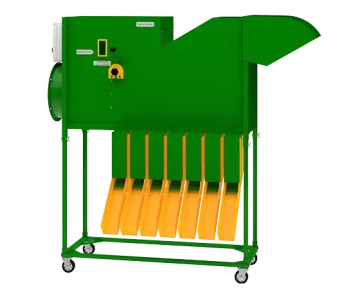
ADS-200e
Learn more
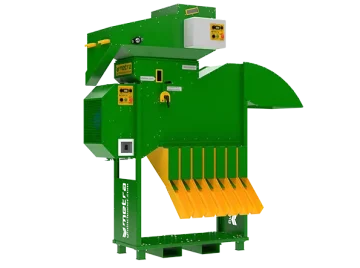
Set - SGC+ADS
Learn more
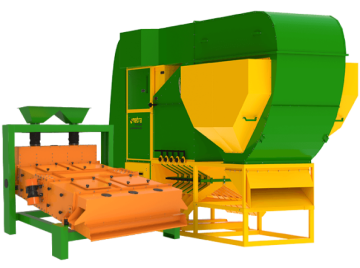
Set Pro - VDSC+ADS
Learn more

SGC-400-H
Learn more
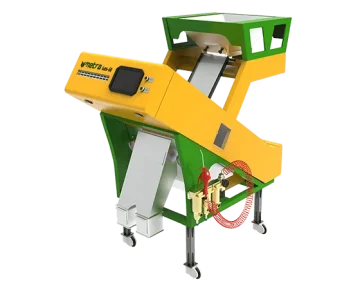
6AS-68
Learn more
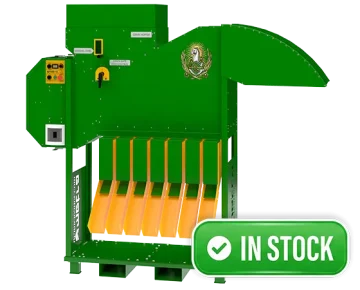
ADS-200
Learn more
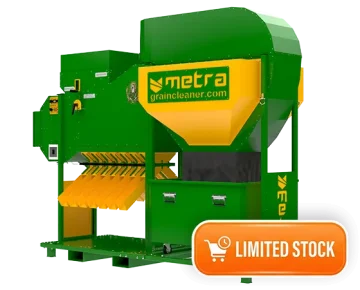
ADS-200-CDC
Learn more

GPC-400
Learn more

SGC-400
Learn more
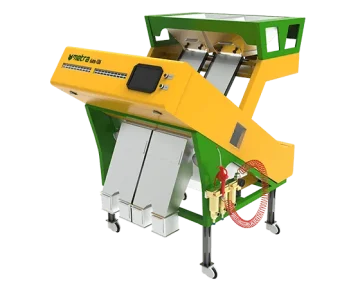
6AS-136
Learn more
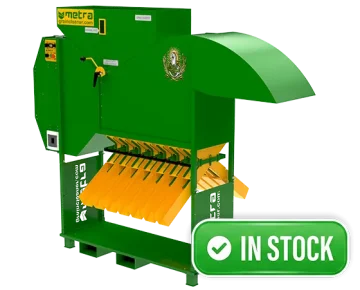
ADS-400
Learn more
ADS-400-CDC
Learn more

ADS-400GM-CDC
Learn more

GPC-2000
Learn more

ADS-600
Learn more
ADS-600-CDC
Learn more

All major breakthroughs in food and agricultural sciences are based on ideas and expertise, but they are completely impossible without specialized equipment. Spectrometers, seed analyzers, and imaging systems are sometimes out of reach for most institutions: they simply cost more than an entire department’s annual budget.
Thanks to the USDA’s National Institute of Food and Agriculture (NIFA) Equipment Grant Program, eligible institutions can acquire between $25,001 and $500,000 to purchase one major piece of research equipment and enhance research, training, or extension efforts in food and agricultural sciences.
How Does USDA NIFA’s Equipment Grants Program Work?
The Equipment Grant Program (EGP) is a targeted funding initiative run by USDA’s NIFA. It provides from $25,001 to $500,000 to help institutions buy, install, and calibrate a single high-value instrument. The funding is designed for universities, State Cooperative Extension systems, and comparable nonprofit entities that carry out agricultural research and training.
This grant isn’t meant to outfit an entire lab or fund multiple experiments and won’t cover general lab items like balances and refrigerators. It squarely focuses on shared-use advanced equipment that must be fully operational within the grant period. Most awards give institutions up to 48 months to complete the project, but the new instrument must be up and running within the first year.
Who Can Apply for USDA NIFA Grants?
The Equipment Grant Program is not open to individual farmers, private companies, and single researchers because extensive equipment must be placed where it can serve a wide community of users, including students, scientists, and outreach professionals.
Eligible applicants include:
- 1852 and 1890 land-grant universities;
- State Cooperative Extension systems;
- comparable nonprofit research institutions.
So, if your institution works in agricultural sciences and has an infrastructure to support a major scientific instrument, you are a strong candidate for EGP, but you must show that the equipment is shared across multiple departments or county offices, and that a plan exists for keeping it in use long after the award period ends.
What’s Allowed and What’s Not
One of the most important things to understand about EGP is its focus. It won’t pay for general lab supplies or cover the costs of running the building, day-to-day maintenance, or salaries for staff, including equipment technicians. Insurance on the equipment and ongoing maintenance contracts are not allowed either. Every dollar must go toward the instrument itself (purchase, shipping, installation, and calibration).
Instead, EGP will fund:
- the purchase, shipping, and installation of a single high-cost research instrument;
- special-purpose equipment (meaning it’s too advanced, expensive, and specialized to be purchased through normal budgets);
- instruments for shared use across departments, programs, or county offices.
In short, EGP puts powerful tools in shared hands, but leaves the rest of the research infrastructure and operations to each institution’s support.
Steps to a Strong Application
The program is competitive, and reviewers want to see more than a simple shopping list:
- First, explain why existing equipment is insufficient and mention outdated models, limited access, or lack of capacity for current research demands.
- Detail how many programs, county offices, or research groups will share the tool, and outline who will be responsible for training, scheduling, and long-term maintenance.
- Collect letters of commitment from department chairs, Extension directors, or partner institutions (they will convince reviewers that the award will benefit a wide group), and present your budget.
- Upload your attachments before the deadline (about two months after the funding announcement).
- The equipment must be fully operational within the first year of your award, even though the full project period is up to 48 months, so watch the deadline.
EGP runs on a predictable schedule. Each institution can submit up to two proposals in a cycle, but only one award can be made per year. The Notice of Funding Opportunity (NOFO) is usually released in the first quarter of the year, applications are due within 60 days, and award announcements come 6-9 months later. Missing a deadline means waiting another year.
NIFA is not issuing a new Request for Applications (RFA) for fiscal year 2025, but the funding will go toward funding proposals that were reviewed but not awarded in earlier rounds. If you’re planning to apply, this is the year to prepare, because a fresh RFA is expected in 2026.
FAQ
Who can apply for the USDA NIFA Equipment Grant Program?
Universities, State Cooperative Extension systems, and nonprofit research institutions that focus on food and agricultural sciences, including 1851 and 1890 land-grant universities.
What can the grant money be spent on?
You can only use these funds for buying, shipping, installation, and calibration a single advanced research instrument. They don’t cover general laboratory supplies, building operations, ongoing maintenance, insurance, and staff salaries
How does the cycle work and what are the deadlines?
The program usually opens for applications early in the year, and there’s a window of about two months to submit. The whole process (reviews, decisions, and awards) takes about 6-9 months, and if you miss the deadline, you’ll have to wait until next year.
Why is this program important for agricultural and food science research?
A lot of vital expensive equipment would be out of reach for many schools and research programs without these grants. The hope is that by making sure major instruments are bought just once and shared across multiple departments or offices, more people get a real chance to do solid research, teach the next generation, and reach out to communities that need the science most.