



Production and sale of grain cleaning equipment worldwide
Farm Roundup | July 15–31, 2025
1 August 2025
Similar Equipment
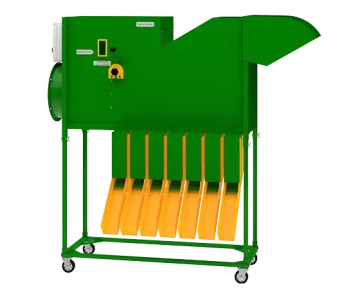
ADS-200e
Learn more

SGC-400-H
Learn more

6AS-68
Learn more

6AS-68L Belt
Learn more

ADS-200
Learn more

GPC-400
Learn more

MGC-800
Learn more

SGC-400
Learn more

STM-120
Learn more

VDSC-400
Learn more

ADS-400
Learn more

ADS-200-CDC
Learn more

ADS-400-CDC
Learn more

GPC-2000
Learn more

Set - SGC+ADS
Learn more

VDSC-800
Learn more

STM-200
Learn more

6AS-204
Learn more

ADS-400GM-CDC
Learn more
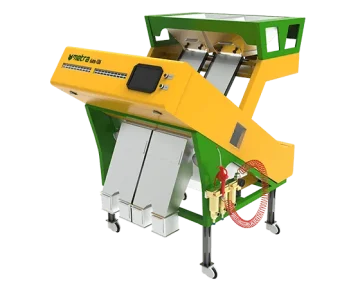
6AS-136
Learn more
Hi! Here is the ag news not to be missed from the last two weeks. Short, sharp, and straight. Ignore endless scrolling through articles and keep control with timely decision-making by reading the digest.
5 Grain Market Fundamentals Every Farmer Should Watch in August 2025
August could be a make-or-break month for corn and soybean prices—with major USDA reports, weather risks, and currency shifts on the horizon. Five key factors are in focus: weather, global demand, the strength of the U.S. dollar, seasonal price patterns, and investment fund activity. High yield expectations and large South American stocks are keeping prices down, while domestic soybean demand for biofuel is rising—but export demand remains uncertain. Market swings following the August WASDE report could be sharp, so growers should be ready with a clear marketing strategy.
Why read this: August could bring big price moves—understanding the drivers can help you sell your crop at the right time.
How Section 45Z Tax Credits Could Spur the Next Big Thing: Sustainable Aviation Fuel
New tax credits under Section 45Z could drive a surge in corn use for sustainable aviation fuel (SAF)—mainly through ethanol production. A portion of the carbon reduction savings may return to farmers—potentially $100–400 per acre. Despite SAF tax credits being cut from $1.75 to $1 per gallon, the aviation sector has strong demand potential—it’s aiming to reduce emissions by 65% by 2050. Demand for ethanol may eventually exceed what U.S. farmers can supply.
Why read this: SAF could become a major driver of corn demand—with strong profit potential, but also political risks.
Will Trump’s ‘Big Beautiful Bill’ help farmers in the Midwest and Great Plains? It depends
The “One Big Beautiful Bill Act” allocates $66 billion in new agricultural funding, with a focus on farmer support through insurance and compensation programs. It permanently extends certain tax benefits, including expanded Agricultural Risk Coverage and Price Loss Coverage. However, it also cuts funding for SNAP and Medicaid, which could hurt local produce growers who sell to domestic markets. Critics warn the bill boosts subsidies for the wealthiest farmers and puts USDA programs at risk if the national deficit rises.
Why read this: The bill may impact your income, tax load, and market demand—it’s key to assess whether your farm will benefit or lose.
Coke’s Shift to Cane Sugar Would Be Expensive, Hurt U.S. Farmer
https://www.agriculture.com/corn-fungicide-timing-is-key-in-high-pressure-environment-11775267
Coca-Cola’s potential shift from high-fructose corn syrup (HFCS) to cane sugar in the U.S. could deal a major financial blow to American corn growers. Replacing HFCS with sugar may cut up to $5.1 billion in industry revenue, reduce rural jobs, and shrink corn demand. The switch would also require costly changes to supply chains and factory setups, while limited domestic cane sugar supplies could drive prices higher. Experts say the move would be expensive, complicated, and not necessarily welcomed by consumers.
Why read this: A shift in Coca-Cola’s ingredients could weaken corn demand, lower prices and farmer income, and disrupt the grain–food industry balance.
U.S.-EU Trade Deal Applauded by Ag and Biofuel Leaders
https://www.agriculture.com/u-s-eu-trade-deal-applauded-by-ag-and-biofuel-leaders-11780440
The U.S. and EU have reached a framework trade agreement that includes zero tariffs on most American agricultural products and a $750 billion EU commitment to buy U.S. energy, including ethanol. Leaders from key industry groups—Farm Bureau, Growth Energy, RFA, NGFA, and NCBA—welcomed the deal as a chance to boost ag exports and overcome non-tariff barriers. Earlier agreements with Indonesia, Japan, and Australia also aim to strengthen U.S. agribusiness in global markets. Ethanol and grain industry reps highlight the deal’s potential to grow exports of corn, ethanol, and related byproducts.
Why read this: The EU deal is a rare breakthrough in a tough market and could directly benefit farmers by driving up demand for ethanol, grain, and meat.
Corn Yield Estimates: How Kernel Weight Impacts Final Numbers
https://www.farmprogress.com/corn/corn-yield-estimates-how-kernel-weight-impacts-your-final-numbers
Corn yield estimates directly depend on kernel weight—this determines a key part of the formula: the fudge factor (number of kernels per bushel). Larger kernels → fewer kernels per bushel → lower fudge factor → higher yield. If ear and kernel counts stay the same, changing the fudge factor from 95 to 66 results in yields ranging from 215 to 310 bu./acre. Many modern hybrids often require a fudge factor of 80 or less, and good grain fill can drop it to 66—while poor weather can push it up to 95.
Why read this: Accurate yield estimates start with the right fudge factor—and that depends heavily on kernel weight shaped by hybrid choice and grain fill conditions.
Feds Say Nebraska GDP Shrunk More Than 6% in First Quarter of 2025, Led by Ag
In the first quarter of 2025, Nebraska’s GDP dropped by 6.1%—the steepest decline in the country alongside Iowa—mainly due to plunging prices for corn, soybeans, and other row crops. Still, some officials say the actual decline was closer to 1.5%, citing differences in forecasting methods. Input costs remain high, while commodity prices have hit their lowest levels in a decade, leading farmers to cut expenses and delay equipment purchases. Despite this, the livestock market remains stable, and government aid and financial reserves could help cushion the blow.
Why read this: A drop in ag GDP is a warning sign—showing that even top-producing states are vulnerable to price and policy swings. Farmers need to prepare for changing scenarios.
Corn Ranks as Most-Used Plant Ingredient in U.S. Pet Food in 2024
https://www.ifeeder.org/research/pet-food-report
According to an IFEEDER report, corn became the top plant-based ingredient used in U.S. pet food production in 2024. The analysis showed that demand for corn in this sector keeps rising, highlighting its nutritional value, consistent availability, and key role in cat and dog food formulas. The pet food market is one of the fastest-growing segments in U.S. agriculture, and corn’s strong position adds another major use case beyond food and energy.
Why read this: Demand from the pet food industry creates a steady, growing market for corn—a key factor to consider in crop planning, contracting, and pricing strategies.
Confidence in U.S. Food Safety Hits an All-Time Low
https://www.foodsafetynews.com/2025/07/confidence-in-u-s-food-safety-hits-an-all-time-low
Americans’ trust in food safety has dropped to the lowest level ever recorded—only 55% of respondents say they have “a great deal” or “some” confidence, down from 62% in 2024 and 70% in 2023. Just 11% now say they’re “very confident” in food safety, compared to 24% in 2022, 17% in 2023, and 14% in 2024. The biggest reasons behind the decline include beliefs that corporate profits come before safety (59%), that parts of the system don’t work together (54%), that government oversight is lacking (46%), and that there are too many product recalls (43%). Foodborne bacteria—like E. coli, Salmonella, and Listeria—top consumers’ concerns, followed by carcinogens, pesticides, heavy metals, and food additives.
Why read this: Falling trust in the food system is a call to action—farmers and processors must be more transparent about safety standards to regain consumer confidence.
US EPA Moves to Approve Dicamba Weedkiller Use on Soybeans
The EPA has proposed to once again allow the use of the herbicide dicamba for cotton and soybeans—even though a federal court blocked it in 2024 due to procedural violations. The agency says dicamba doesn’t pose a major threat to human health or the environment but does admit it can drift and damage nearby plants. The new proposal includes tighter limits on when and how much dicamba can be sprayed. Companies like Bayer, BASF, and Syngenta support reapproval, while environmental groups continue to oppose it.
Why read this: The EPA’s decision will determine whether farmers can keep using dicamba to control weeds in herbicide-resistant soybeans and cotton.
3 Things to Learn from Scouting Soybeans
https://www.farmprogress.com/soybean/3-things-learn-scouting-soybeans
Scouting soybeans helps detect diseases, pests, and growth stages early—essential for making informed decisions both this season and next. Across much of the Midwest, conditions are stable with few infections—but experts warn about risks from Japanese beetles, sudden death syndrome, and red crown rot. Agronomists recommend applying fungicides during the R3 stage—when soybeans are most vulnerable. Special attention should also be given to weed control—especially targeting waterhemp.
Why read this: A preventive field check at the R3 stage can protect your yield from disease—and help avoid unnecessary costs.
USDA Relocation Plan Will Save About $4 Billion, Officials Say
The USDA plans to relocate 2,600 employees from Washington, D.C., to five new regional hubs—aiming to save about $4 billion by closing buildings and cutting maintenance costs. The selected locations were chosen for their lower cost of living and existing USDA facilities, though none are in the top five agricultural states. Most USDA research labs will remain open, but not all staff are expected to relocate. USDA leaders believe most workers will keep their jobs, but unions and senators have raised concerns about the impact on staff expertise and the department’s effectiveness.
Why read this: This move won’t just shift where experts work—it could reshape how agricultural support and policy are delivered in your state.
What’s a Potato? A Nine-Million-Year-Old Tomato
Imagine this—today’s potato is the child of a wild tomato and a distant cousin called Etuberosum, which happened to “meet” 9 million years ago in the Andes. That hybrid led to the first tubers—the same ones we now fry, bake, and mash. Two genes, one from the tomato and one from Etuberosum, came together and triggered the evolution of a brand-new plant organ. From this botanical accident came the world’s third most important food crop after wheat and rice.
Why read this: Next time you order fries, you’ll know there’s a bit of tomato in that delicious choice, too.
Thanks for reading! We’ll be back with more insights and updates in the next issue. Until then—stay sharp, stay ahead.