Production and sale of grain cleaning equipment worldwide
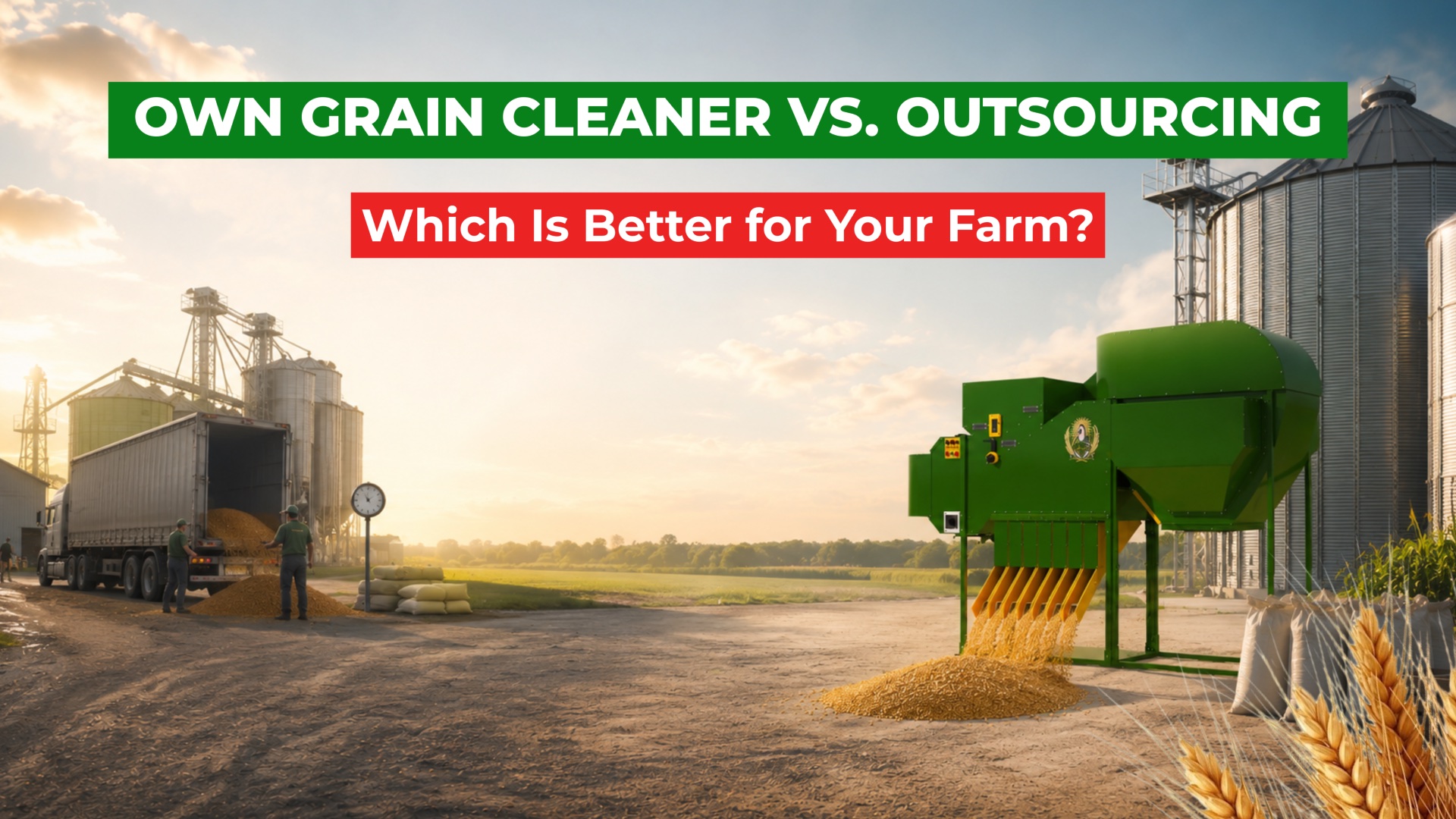
Own Grain Cleaner vs. Outsourcing Grain Cleaning: Which Is Better for Your Farm?
11 June 2026

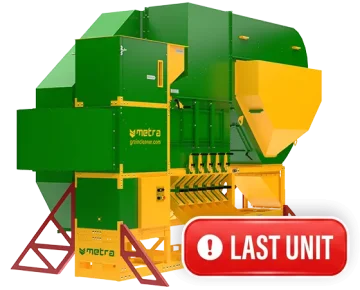
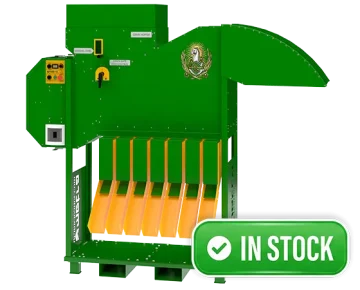
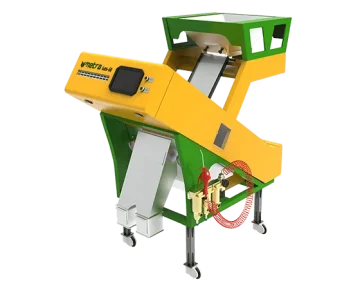


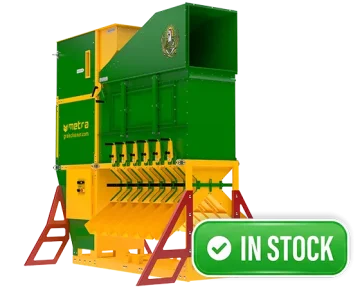
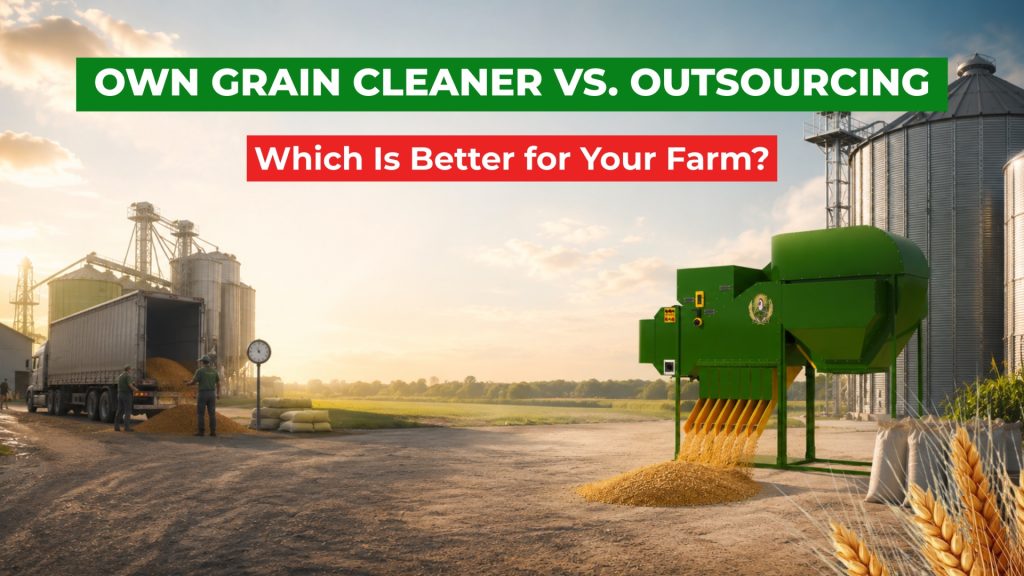
For many farmers, grain cleaning becomes a decision between two options: pay someone else to clean the crop, or invest in your own grain cleaner and control the process on the farm.
At first, outsourcing can seem easier. You harvest the grain, send it to a third party, wait for cleaning, and pay for the service. But when you look at timing, storage, market prices, seed preparation, transportation, and repeated service costs, the picture changes quickly.
A grain cleaning machine is not just another piece of equipment. For many farms, it becomes a way to protect grain quality, reduce dockage risk, improve storage conditions, and sell when the market price is right.
So which option makes more sense: owning a grain cleaner or outsourcing grain cleaning? Let’s compare both approaches.
Why Grain Cleaning Matters Before Selling or Storage
Grain cleaning removes unwanted material from harvested grain: dust, chaff, light kernels, broken kernels, weed seeds, stones, damaged grain, and other impurities. Depending on the crop and contamination profile, cleaning may also help reduce mold-related risk and improve the overall quality of the grain lot.
Cleaning is not only about appearance.
It affects how easily air moves through the grain mass and how well the storage system can manage heat and moisture.
Clean grain is easier to store, easier to handle, and often easier to market. Extension materials note that cleaning grain before loading it into storage bins can reduce foreign material and improve storability. Clean grain also improves airflow during aeration, while unclean grain can restrict airflow, reduce aeration efficiency, and contribute to insect, mold, and deterioration problems.
That is why the real question is not only “How much does grain cleaning cost?” The better question is:
Who controls the timing, quality, and value of your grain — you or someone else?
Option 1: Outsourcing Grain Cleaning
Outsourcing means paying a grain cleaning service, elevator, processor, or another third party to clean your crop. This can be useful in certain situations, especially if a farm has a small amount of grain, no storage capacity, or no immediate plan to clean grain regularly.
But outsourcing also creates several limitations.
You Wait for Someone Else’s Schedule
During harvest and post-harvest season, everyone needs the same services at the same time. If the third-party cleaner is busy, your grain may sit and wait.
That delay can become expensive. Grain prices can move quickly. If the market offers a good price today, but your grain will only be cleaned next week or next month, you may miss the best selling window.
With outsourcing, you are not only paying for the service. You are also giving up control over timing.
Market Price Can Drop While You Wait
One of the biggest hidden costs of outsourcing is price risk.
If grain needs to be cleaned before sale, but the cleaning service is not available immediately, the farmer may lose flexibility. By the time the grain is cleaned and ready for delivery, the elevator price may be lower.
This is especially important for farms that store grain and wait for better market conditions. If you cannot clean quickly when the price is attractive, you may lose the opportunity.
You Pay Every Time
Outsourcing is not a one-time cost. You pay every season, often every batch.
Even if the fee looks reasonable per bushel, the cost adds up year after year. As your acreage, storage volume, or crop diversity grows, outsourcing becomes a recurring operating expense.
Owning a grain cleaner changes the model. Instead of paying again and again, you make one investment in grain cleaning equipment and use it whenever your operation needs it.
You Have Less Control Over Quality
When cleaning is done off-farm, you depend on someone else’s setup, settings, priorities, and availability.
The cleaning result may be good, but it may not always be optimized for your specific goal. Some grain lots need basic pre-cleaning before storage. Others need deeper cleaning for better marketability. Some crops need careful seed cleaning to prepare more uniform planting material.
With your own grain cleaning machine, you can adjust the process around your crop, your contamination problem, and your end goal.
Option 2: Owning Your Own Grain Cleaner
Investing in your own grain cleaner gives you control over one of the most important post-harvest steps: turning harvested grain into cleaner, more marketable, and more manageable grain.
This is where on-farm grain cleaning becomes a strategic advantage.
You Can Clean Grain Before Storage
One of the strongest reasons to own a grain cleaner is the ability to clean grain before it goes into storage.
When grain contains fines, dust, chaff, and broken material, airflow inside the bin can become less uniform. That can make aeration less efficient and increase the risk of hot spots, spoilage, insects, and mold development. Research and extension sources point out that cleaner grain can improve storability and reduce problems related to airflow resistance, insects, mites, mold, and grain deterioration.
Storage problems often begin with fines and airflow restriction.
Fine material can accumulate in dense pockets, especially near the center of a bin, where it can concentrate moisture and make aeration less uniform. That is why storage risk is not always visible at loading.
With your own grain cleaning equipment, you do not have to wait until the grain is already in the bin or ready to sell. You can clean it before storage and start with a better grain lot from the beginning.
You Control the Selling Window
A farm grain cleaner gives you flexibility.
If the elevator price is good, you can clean the grain and prepare it for sale without waiting for a third-party service. If the price is not attractive, you can clean the grain, store it, and wait.
This control can be especially valuable in volatile markets. Instead of asking, “When can someone clean my grain?” you can ask, “When is the best time for me to sell?”
That difference matters.
You Can Reduce Dependence on Elevators and Middlemen
Outsourcing often gives other people control over part of your margin. Elevators, service providers, and middlemen may all influence the final value of your grain.
Owning a grain cleaner helps you keep more of that control on the farm. You decide when to clean, how much to clean, what quality target to aim for, and when to deliver.
This does not mean every farm will stop using outside services completely. But having your own grain cleaning machine gives you options. And in agriculture, options often translate into better timing, better quality, and better margins.
The Storage Advantage: Cleaner Grain Can Mean Lower Risk
Storage is not only about having enough bin space. It is about protecting the value of the crop after harvest.
Dirty grain can create several storage challenges:
- fines accumulation and dust pockets;
- less uniform airflow;
- lower aeration efficiency;
- higher risk of hot spots;
- moisture concentration in dense areas of the grain mass;
- more favorable conditions for insects;
- higher spoilage risk and mold-related problems;
- more work during handling and unloading.
Dirty grain can increase hidden storage losses.
Even when dockage seems small, fines can settle, restrict air movement, and create local moisture and temperature differences that lead to deterioration over time.
Aeration is commonly used to maintain more uniform grain temperature and moisture conditions in stored grain, and airflow is an important part of that process. If grain contains excess fine material, airflow can become less efficient, fan run time can increase, and some areas of the grain mass may not cool or dry evenly.
This is where pre-storage grain cleaning becomes practical. By removing light impurities and fine material before the grain goes into the bin, you can improve airflow, support more efficient aeration, and reduce avoidable spoilage risk.
For a farmer, that can mean fewer surprises later in the season.
The Energy Factor: Why Cleaning Before Storage Can Help
When grain is cleaner, air can move more evenly through the stored grain mass. That can reduce the burden on aeration and ventilation systems, because fewer dense pockets block the path of airflow.
This does not mean a grain cleaner replaces proper storage management. Moisture, temperature, bin sanitation, monitoring, and aeration still matter. But starting with cleaner grain gives the storage system a better chance to work efficiently and keep temperature and moisture more uniform.
In other words, grain cleaning before storage is not only about selling. It is also about protecting the crop while you hold it.
The Mobility Advantage: Clean When and Where You Need
Another practical benefit of modern grain cleaning equipment is mobility.
Metra aerodynamic grain cleaners are promoted as highly mobile machines that are easy to transport, with low maintenance needs and no lubrication requirement for moving parts.
For many farms, this matters. A grain cleaner does not have to be a complicated stationary system that only works in one place. Depending on the model and setup, a farmer can use the machine where it fits best in the operation: near storage, near handling equipment, or as part of a seasonal workflow.
The value is simple: plug it in, set it up, and clean grain when the farm needs it.
Maintenance: A Key Difference in Long-Term Cost
One of the concerns farmers often have about buying equipment is maintenance. More machines can mean more repairs, more downtime, and more labor.
That is why the design of the grain cleaner matters.
Metra’s aerodynamic grain cleaners are positioned around low maintenance, mobility, and no moving parts in the cleaning chamber, which helps reduce routine service requirements compared with more mechanically complex systems.
This is important for ROI. A machine that requires constant repair may look affordable at first but become expensive over time. A low-maintenance grain cleaner can help keep the cost per bushel lower, especially when the farm cleans grain every season.
One Investment vs. Recurring Service Costs
Outsourcing is a recurring expense. Owning a grain cleaner is a capital investment.
That difference becomes more important every year.
With outsourcing, the money leaves the farm every time grain needs to be cleaned. With ownership, the equipment remains on the farm and can be used across seasons, crops, and different grain lots.
The payback depends on many factors:
- number of bushels cleaned per season;
- current outsourcing cost;
- dockage and grade penalties;
- crop type;
- contamination level;
- storage needs;
- labor availability;
- market price differences;
- whether the machine is also used for seed preparation.
For some farms, payback may take several seasons. For others, especially farms dealing with repeated dockage, high service costs, or large volumes, ROI can happen much faster. Metra’s own catalog materials describe the possibility of earning back the investment within the first year, depending on the situation.
The main point is not that every farmer has the same payback period. The point is that ownership gives the farm an asset that continues working after the first season.
Seed Cleaning: The “Bonus” Benefit Many Farmers Underestimate
Grain cleaning is often discussed only in terms of selling grain. But for many farms, the additional value is seed preparation.
When you clean and sort your own seed, you can create more uniform planting material. Uniform seed can help improve planting consistency, emergence, and crop stand uniformity.
Seed cleaning has long been connected with the goal of producing higher-quality seed and more uniform raw material. USDA seed cleaning materials emphasize that efficient seed-cleaning practices are necessary to obtain high-quality seed.
For a farmer, this can mean more than a cleaner product. It can support better field performance.
More uniform seed can contribute to:
- more even seeding;
- more consistent germination;
- more uniform emergence;
- more even crop development;
- easier crop management;
- more synchronized maturity.
This is the “cherry on top” of owning a grain cleaner. The same machine that helps prepare grain for storage or sale may also help improve the quality of seed used on the farm.
When Outsourcing May Still Make Sense
Owning grain cleaning equipment is not the right choice for every operation.
Outsourcing may still make sense if:
- you clean very small volumes;
- you do not store grain;
- you rarely face dockage or quality penalties;
- you do not have space for equipment;
- you do not want to manage any post-harvest processing;
- you only need specialized cleaning once in a while.
For these farms, paying a third party may be simpler.
But if grain cleaning is a repeated need, if storage is part of the business model, or if timing affects your profit, ownership becomes much more attractive.
When Buying a Grain Cleaner Makes More Sense
Investing in your own grain cleaner usually makes the most sense when a farm wants more control.
It may be the better choice if:
- you clean grain every season;
- you store grain and sell later;
- you want to clean grain before storage;
- you want to improve airflow and aeration efficiency in storage;
- you want to reduce dockage penalties;
- you deal with light impurities, dust, chaff, damaged kernels, or mold-related risk;
- you want to reduce fines accumulation, moisture concentration, and spoilage risk;
- you want to prepare uniform seed for planting;
- you want to sell when the market price is favorable;
- you want to reduce dependence on middlemen;
- you want a long-term asset instead of recurring service costs.
This is where on-farm grain cleaning becomes more than a cost-saving tool. It becomes part of the farm’s quality and storage control system.
How Metra Grain Cleaners Fit This Decision
Metra grain cleaners are designed for farmers who want practical, on-farm control over grain cleaning.
Depending on the model and configuration, Metra offers aerodynamic grain cleaners and other grain cleaning equipment for different crops, capacities, and cleaning goals. Metra materials describe machines with capacity options up to 8,000 bushels per hour, which allows farms to clean large volumes efficiently.
Metra aerodynamic grain cleaners are especially relevant for farmers looking for:
- on-farm grain cleaning;
- pre-storage cleaning;
- improved airflow and aeration efficiency;
- lower maintenance;
- mobile equipment;
- quick switching between crops;
- seed cleaning and sorting;
- better control over grain quality;
- reduced dependence on outsourcing.
For farms that want to clean grain before storage, respond quickly to market prices, and prepare better seed for planting, owning a Metra grain cleaner can be a practical investment.
Final Verdict: Outsourcing Is a Service. A Grain Cleaner Is Control.
Outsourcing grain cleaning can solve a short-term problem. But owning a grain cleaner can change the way a farm manages grain quality.
With your own equipment, you can clean grain before storage, reduce waiting time, respond faster to market prices, prepare more uniform seed, and reduce recurring service costs. You pay once for the machine, then continue using it season after season.
For farms that clean grain regularly, store grain, or want more control over quality and timing, owning a grain cleaner may be the stronger long-term decision.
Because in the end, the biggest advantage is not only cleaner grain.
It is control over your crop, your timing, and your storage risk.
To choose the right setup, consult with a specialist or request recommendations based on your crop, storage plan, capacity needs, and contamination type.
tel: +17015150488
email: info@graincleaner.com