Production and sale of grain cleaning equipment worldwide
Good Grain in the Rejects? Compare the Whole Cleaning Run
29 October 2026
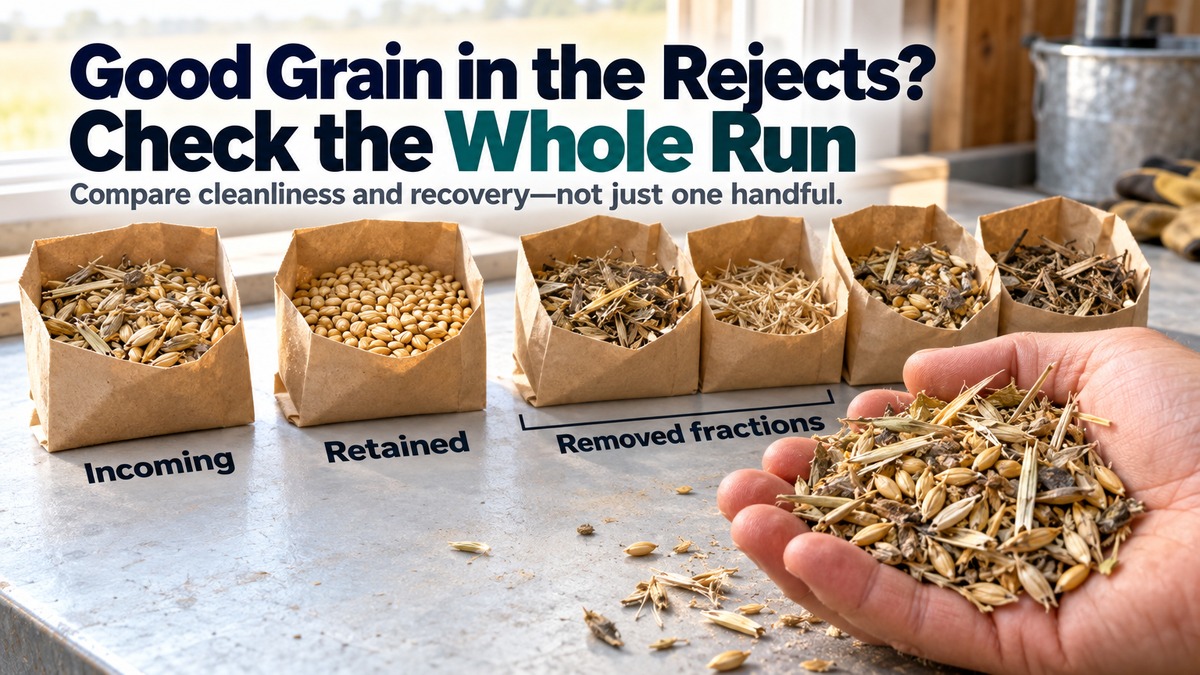
A useful kernel is a clue—not the whole result
Useful kernels in your cleaner’s removed material give you a place to improve the setup. Compare the incoming grain, retained grain and every removed fraction from the same run. Check what impurities came out, what remains with the grain you want, and how much useful grain went elsewhere—not just how one handful looks.
Put the incoming grain beside both sides of the separation
Start by deciding what counts as useful grain for the intended use. Keep that definition unchanged across all samples and setup comparisons.
Look at three things:
– Incoming grain: the useful kernels and unwanted material entering the cleaner.
– Retained grain: the impurities still mixed with the grain you intend to keep.
– Every removed fraction: the unwanted material separated out and any useful kernels traveling with it.
Keep the samples separate and identify the lot, run and output. An incoming reference prevents you from judging the finished grain without knowing where it started. NDSU’s certified-seed guidance (ag.ndsu.edu/bqa/ndfoundationseedstocks/resources/producing-certified-seed-bulletin-a1125) recommends keeping representative samples before and after conditioning to help investigate contamination and quality questions.
Represent each stream, not its cleanest or dirtiest spot. The regional Seed Lot Sampling bulletin (ag.ndsu.edu/bqa/ndfoundationseedstocks/resources/seed-lot-sampling-ncr-bulletin-403) explains that automatic samplers drawing across the full flow most accurately represent a seed lot. It also recommends checking individual samples for variation before combining them, thoroughly mixing comparable samples, and ideally using a mechanical divider to reduce the sample without hand-picking it. Apply that principle separately to each stream; never mix incoming, retained and removed material together.
Measure cleanliness and recovery—not just reject appearance
Purity is how much of an output is the desired crop. Recovery is how much of the original useful crop reaches its intended output. A clean-looking retained sample tells you something about purity, but not how much useful grain you kept.
For a weight-based comparison, record the total incoming weight and the total weight of every output from the same run. Determine the useful-grain percentage by weight in a representative sample of each stream. Multiply each stream’s total weight by its useful-grain percentage to estimate the useful pounds in that stream. Use the same weight basis throughout; do not substitute kernel counts for weight percentages.
Equal-sized grab samples alone cannot establish recovery. A small removed stream and a large removed stream can look identical in a sample yet carry very different amounts of useful grain.
Here is a clearly hypothetical example with assumed inputs:
| Material | Total weight | Useful grain |
|—|—:|—:|
| Incoming | 1,000 lb | 900 lb |
| Retained | 900 lb | 882 lb |
| All removed material combined | 100 lb | 18 lb |
Retained purity = 882 lb ÷ 900 lb retained × 100 = 98%.
Useful-grain recovery = 882 lb ÷ 900 lb incoming useful grain × 100 = 98%.
The two percentages happen to match here, but they answer different questions. The removed material contains 18% useful grain by weight. Yet the useful-grain loss from the retained output is 18 lb ÷ 900 lb incoming useful grain × 100 = 2%—not 18%.
These are assumed inputs, not a Metra test result or an acceptable-loss target.
Compare two setups on both results
After a setup change, repeat the comparison on material from the same lot with comparable incoming composition. Keep the intended use and definition of useful grain unchanged.
If the retained grain gets cleaner but useful-grain recovery falls, the change traded more useful grain for impurity removal. If recovery rises but more unwanted material stays with the retained grain, the change is not automatically an improvement. Judge the balance against the cleanliness needed for the intended use or applicable buyer requirements.
The strongest improvement is cleaner retained grain without lower recovery—or higher recovery without giving back needed cleanliness. Do not choose a setup solely because its reject sample looks dirtier.
Use the comparison to guide Metra setup help
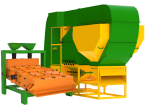
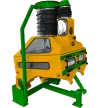
ADS airflow cleaning separates grain into fractions and removes lighter unwanted material. ADS-CDC uses aerodynamic separation with a cyclone dust collector. For this job, the aim is to direct unwanted light material away from the useful fraction without overlooking useful kernels diverted to other outputs.
Metra can help tune airflow, feed and fraction routing for your mixture. The ADS operating manual describes airflow adjustment and baffles that direct grain toward selected output trays. Metra’s operating experience also shows that heavily contaminated grain may need a lower feed rate to improve cleaning quality. The whole-run comparison shows whether a change improves cleanliness, recovery or both.
Contact Metra at [info@graincleaner.com](mailto:info@graincleaner.com) to discuss your grain and arrange a free sample test. The manager will help with sample and demonstration arrangements so you can see the retained grain and removed fractions.