

Production and sale of grain cleaning equipment worldwide
Barley After Rain: What Cleaning Can Separate
24 September 2026
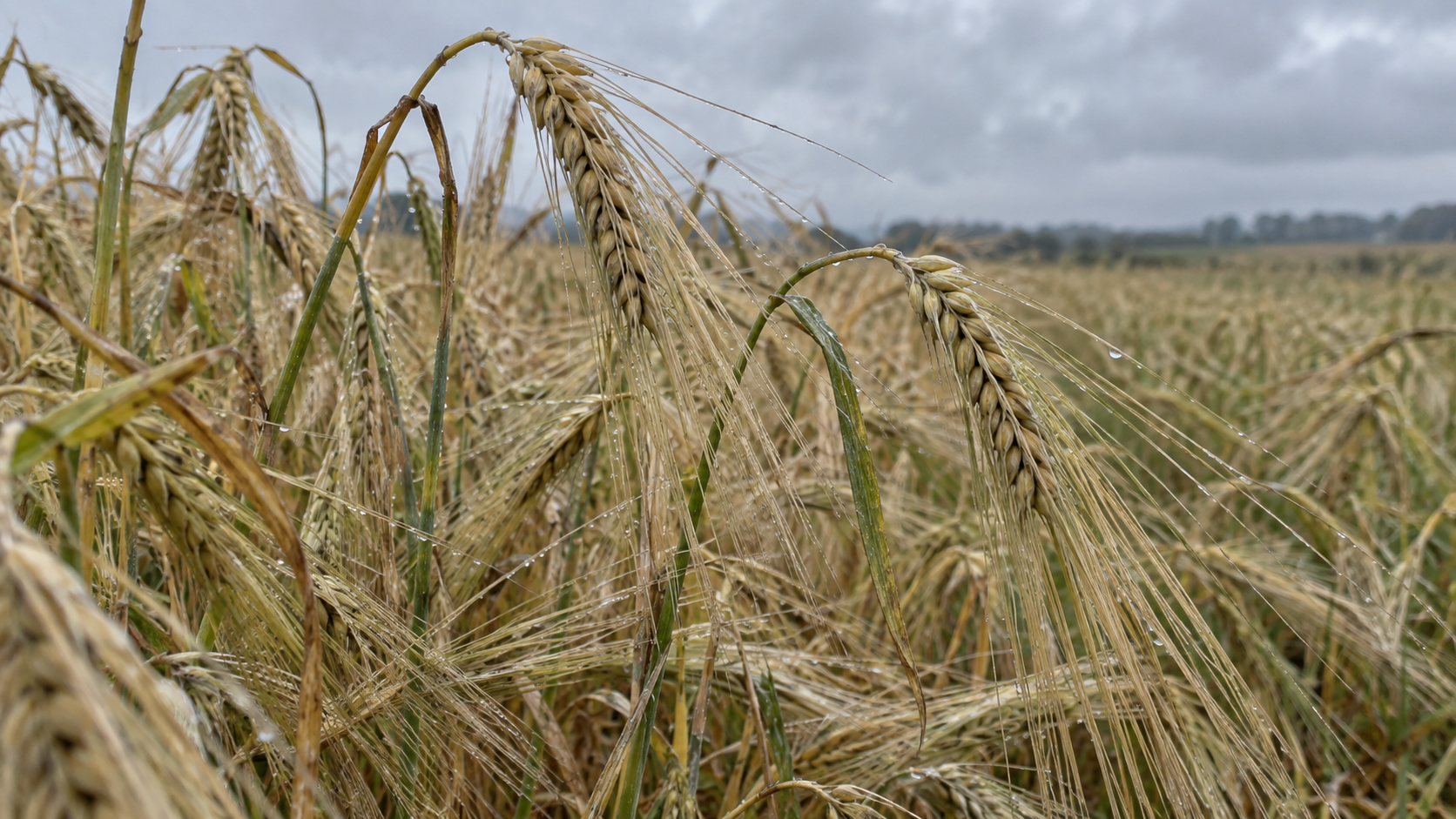
Barley cleaning after rain can separate a lighter or visibly different fraction from the grain you want to keep. Start by identifying the defect that is costing you a market, whether the affected kernels can be separated, and how much acceptable barley remains. For malting barley, the retained grain also needs the buyer's germination and quality checks.
Manitoba Agriculture's September 22, 2026 crop report makes this a timely decision. In the Southwest region, recently harvested barley was being downgraded for sprouting, colour and low test weight, with much of that crop grading as feed. Those are regional observations, not a test result for every Manitoba farm. The provincial table put barley harvest at 76% complete through September 21. Manitoba Crop Report
Start with the reason the buyer lowered the grade
Ask the buyer for the actual assessment of your lot. A remark such as "weather damage" is a starting point; the cleaning decision needs the particular concern behind it. Is the issue visible sprouts, weathered colour, thin kernels, foreign material, low test weight, or a laboratory result relevant to malting?
Keep those observations separate. Test weight describes the mass of grain in a defined volume. It does not weigh each kernel, and a low bulk reading alone does not identify which kernels should be removed. The Canadian Grain Commission treats sprouting, weathering, test weight and kernel size as distinct grading considerations. CGC barley grading factors
Before arranging a trial, ask what the buyer would need to see in a new sample. That gives the work a defined target. A visually brighter sample has limited value if the buyer's unresolved concern is germination performance.
How an aerodynamic grain cleaner handles lighter barley
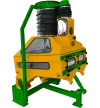
A METRA ADS aerodynamic grain cleaner separates grain according to its movement through controlled airflow. Kernel mass and aerodynamic properties influence the path through the machine. The operator adjusts the feed, airflow and collection dividers to form the desired fractions. METRA ADS operating manual, sections 4, 5 and 9
A damaged kernel can retain much of its outside size while losing mass. Where that difference changes its behaviour in air, the airflow cleaner can separate the lighter fraction from heavier grain. Looking only at kernel size would miss this possible separation.
For rain-affected barley, the trial should establish whether the unwanted kernels concentrate in that lighter fraction. Sprouted or shrivelled kernels are relevant targets when their aerodynamic behaviour differs sufficiently. The machine separates physical fractions; it does not label every kernel as sound or damaged. Feed rate and collection settings therefore belong in the trial record alongside the grain samples.
METRA's aerodynamic grain cleaner range is a starting point for this separation task. Select the configuration around the lot, the required output and the hours available for cleaning.
When colour or size calls for another stage
Visible discolouration presents a different separation opportunity. An optical colour sorter uses cameras to identify selected visible differences and air jets to divert that material. It is relevant when the unwanted barley can be distinguished by the machine's imaging system. It does not establish germination status from colour alone.
Screening can address material that separates through chosen openings. Bulky straw or unthreshed heads may justify a screening stage in the cleaning line. Add that stage because the incoming sample requires it; a two-machine line is not automatically necessary for every barley lot.
The useful sequence is to identify the defect, choose the physical property that allows separation, and inspect the resulting product. Avoid assuming that one pass must solve every reason for a downgrade.
Malting acceptance needs more than a clean appearance
Early pre-germination can be invisible on the kernel. The Canadian Grain Commission explains that a routine germination-energy test does not itself detect pre-germination. Rapid visco analysis (RVA) helps detect and measure pre-germination. Ask the malt buyer or laboratory which tests are appropriate for the lot and delivery plan. CGC guidance on pre-germination in malting barley
A cleaner cannot reverse sprouting in an individual kernel. Removing a separable affected fraction can change the composition of the retained grain, but malting acceptance still depends on that grain's test results and the buyer's requirements.
Timing also matters. The CGC notes that pre-germinated barley may lose germination capacity during storage, including barley accepted for malting earlier. A promising result at harvest is therefore not a reason to ignore the planned delivery date or storage conditions.
Use the trial to decide whether to clean the lot
Keep the original lot identifiable and take a representative sample using the procedure requested by the buyer or laboratory. Preserve an untreated reference, then weigh the trial input and all collected outputs. Label the retained grain, light material and any intermediate fraction so the laboratory results can be matched to the actual separation.
Compare the original and retained samples using the same relevant methods. Check the rejected material as well: acceptable barley leaving with it reduces recovery. If the retained sample meets the buyer's target, ask for the corresponding price and delivery terms before processing the whole lot.
Cleaning changes the mixture that moves into storage or sale. Drying and temperature management remain separate tasks; METRA's guide to grain cleaning before storage covers that next decision.
Contact METRA with your barley assessment, intended market, lot size and required cleaning rate. A demonstration with your grain can show the fractions and provide the retained sample for the buyer's next assessment.