Production and sale of grain cleaning equipment worldwide
Fall Seed Treatment: Why Treat Seed Before Spring Planting
11 September 2026


For most farmers, spring is one of the busiest and most time-sensitive parts of the year.
The planting window opens, weather conditions change quickly, fields need to be prepared, equipment has to be ready, and labor is pulled in several directions at once. At the same time, planting seed may still need to be moved, cleaned, selected, and treated.
But seed preparation does not always have to wait until planting season.
For farms using treatment products that are labeled and suitable for advance treatment and storage, fall can be a practical time to prepare seed for fall planting or the following spring.
This is especially relevant for fall-planted crops such as winter wheat, farms preparing their own planting seed, and growers making seed-treatment decisions well before spring.
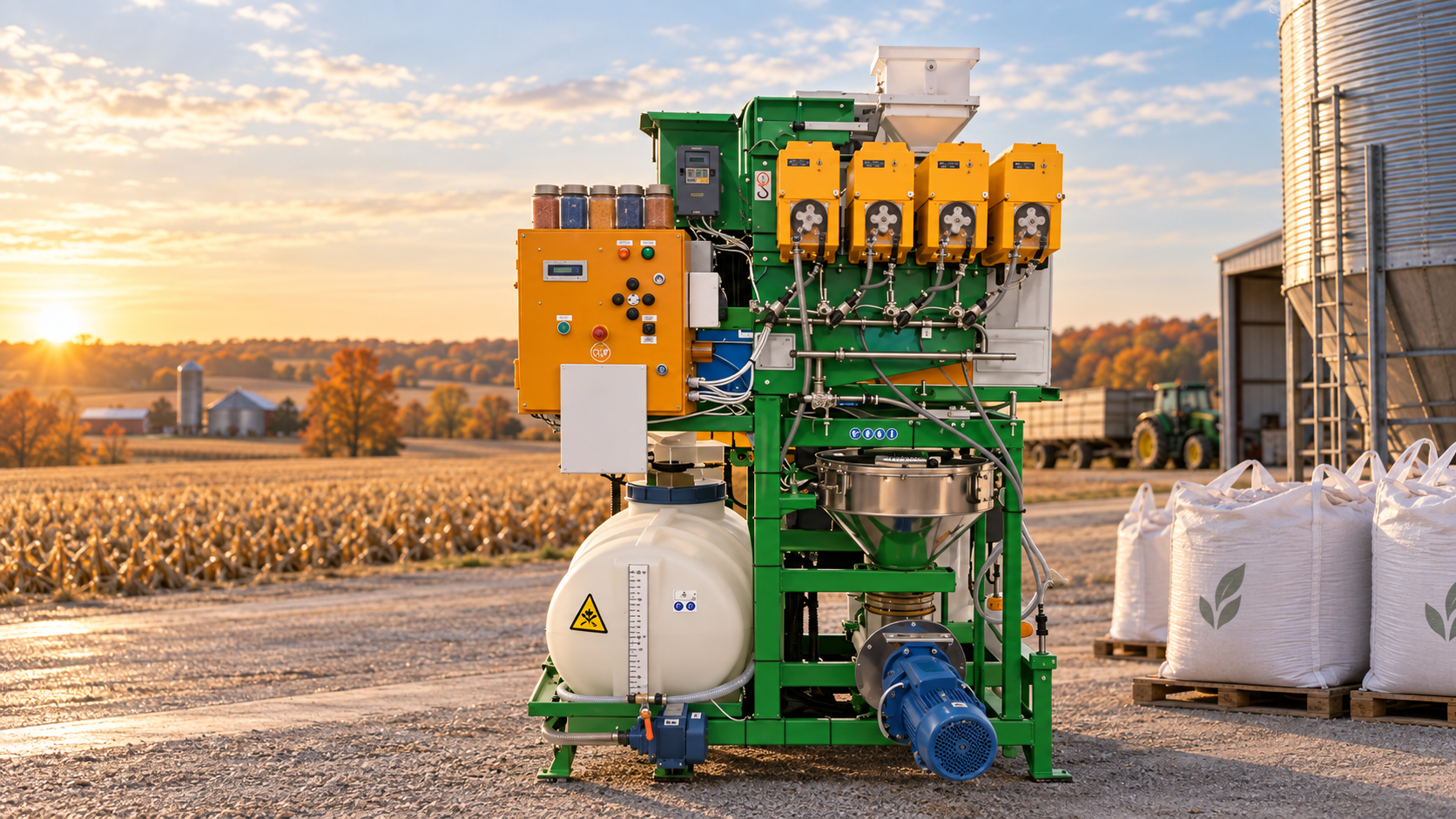
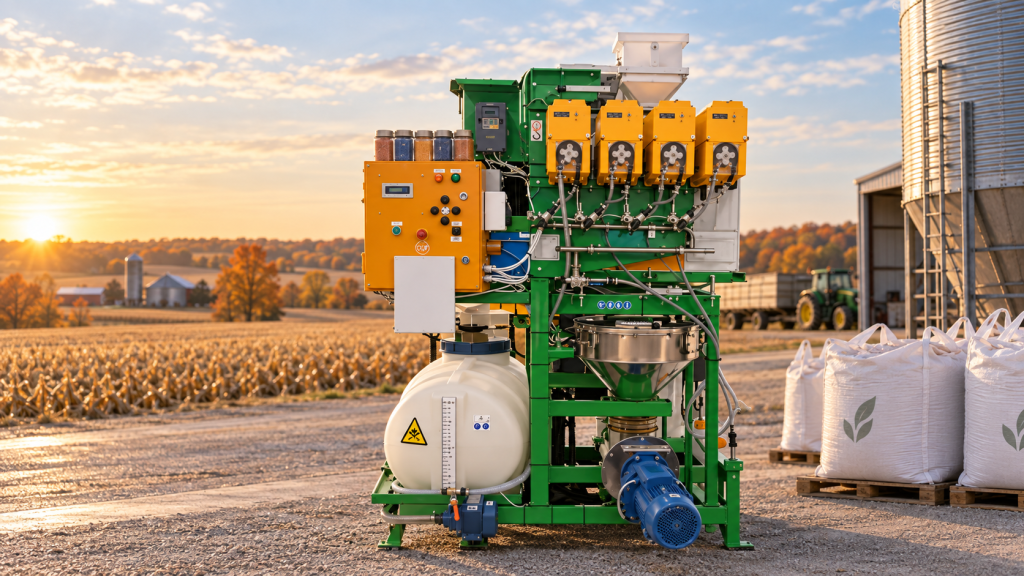
Planning to treat your own seed? See METRA Seed Treaters.
What Is Seed Treatment and Why Is It Used?
Seed treatment involves applying an appropriate labeled product directly to planting seed before it goes into the ground.
Depending on the crop and agronomic need, growers may use different types of seed-applied products, including disease-control, insect-control, and biological treatments.
The goal is to help protect seed and young seedlings during one of the most vulnerable stages of crop establishment.
Fungicide seed treatments can help manage specific seed-borne and soil-borne diseases. Other treatments may target certain early-season insects or provide additional biological benefits, depending on the product being used.
The need for treatment is not the same for every crop or every field.
For example, University of Minnesota Extension recommends considering factors such as seed-borne disease in the seed lot, a history of wireworms, and recurring root diseases when evaluating seed treatment for small grains.
Soil and planting conditions can matter as well. Slow emergence can leave seed exposed to damaging conditions for a longer period, particularly when planting occurs into challenging soils.
Seed treatment should therefore be selected according to the crop, field history, target disease or pest, planting timing, and the treatment product label.
Why Treat Seed in the Fall Instead of Waiting Until Spring?
The biggest advantage is preparation.
Instead of waiting until the spring rush to clean and treat a large volume of planting seed, farms may be able to complete part of that work during a less time-sensitive period of the year.
This is not unusual in commercial crop planning. University of Nebraska-Lincoln CropWatch notes that farmers booking soybean seed in the fall may also need to make decisions about fungicide and insecticide seed treatments months before they know what weather conditions they will face at spring planting.
For fall-planted crops, such as winter wheat, seed treatment can be incorporated directly into seed preparation before autumn planting.
For spring crops, treating seed ahead of time may help shift work away from the busiest planting window, provided that the treatment product is specifically labeled for the intended storage period and planting date.
When spring arrives, the seed can already be cleaned, selected, and prepared.
That means fewer operations competing for labor, equipment, and management attention when field conditions are finally right to plant.
Start With Clean, Quality Seed
Before treating seed, start with proper grain and seed cleaning.
Farm-saved grain may contain dust, chaff, weed seeds, light kernels, damaged kernels, and other unwanted material. There is little benefit in applying treatment product to screenings or material that will not ultimately be planted.
Cleaning first helps concentrate the treatment process on the seed selected for planting.
A simple workflow looks like this:
CLEAN → SELECT → TREAT → STORE → PLANT
1. Clean
Remove unwanted material such as dust, chaff, weed seeds, light material, and other impurities.
2. Select
Choose the quality seed that will actually be used for planting.
3. Treat
Apply the appropriate registered seed-treatment product at the required application rate.
4. Store
Keep treated seed under suitable storage conditions and follow all label requirements.
5. Plant
When the planting window opens, the prepared seed is ready for the next step.
For farms using their own planting material, a grain cleaner and seed treater can therefore work as two stages of the same on-farm seed preparation process.
Accurate Seed Treatment Starts With Accurate Dosing
The benefits of a seed-treatment program depend in part on applying the treatment correctly.
Too little product can result in incomplete application. Too much can waste treatment, increase costs, and may exceed the labeled application rate.
That makes accurate dosing one of the most important functions of seed treatment equipment.
A seed treater should deliver the required amount of working solution consistently as seed passes through the machine. It should also allow operators to adjust the application rate when changing crops, treatment products, or operating conditions.
With larger seed volumes, consistent mechanical dosing also makes the process more repeatable than relying on less controlled application methods.
Why Uniform Seed Coverage Matters
Accurate dosing is only part of the process. The treatment also needs to be distributed as evenly as possible across the seed lot.
When some seed receives too little treatment while other seed receives too much, the application becomes less consistent and treatment product may be used inefficiently.
Modern seed treatment equipment is designed to combine controlled liquid delivery with continuous mixing of the seed, helping produce more uniform coverage across the batch.
Treated seed is also commonly given a distinctive color so it can be clearly identified as treated material.
Always follow the treatment manufacturer’s label for application rates, personal protective equipment, handling, storage, planting intervals, and disposal requirements.
What to Look for in an On-Farm Seed Treater
From METRA’s equipment perspective, capacity alone should not determine the choice. A seed treater should fit the way seed is prepared, moved, and processed on your farm. When comparing equipment, look at these six factors:
Dosing Accuracy
The machine should deliver the required treatment rate consistently and make calibration and rate changes straightforward.
Uniform Coverage
Look for a system that combines controlled liquid delivery with thorough seed mixing so treatment is distributed as evenly as possible across the seed lot.
Throughput
Match capacity to the volume of seed you need to prepare and the time available before planting. Too little capacity can turn treatment into a bottleneck, while more capacity than you need may add unnecessary cost.
Mobility
If seed is handled in more than one location, a mobile configuration can be valuable. For a fixed processing line, a stationary setup may make more sense.
Adjustment Between Crops
If you treat different crops or use different treatment products, the equipment should allow practical adjustment of application rates and operating settings without excessive downtime.
Integration With Cleaning Equipment
For farms using their own planting seed, cleaning and treatment work best as one process. Consider how the treater will receive cleaned seed and fit into your existing grain-handling setup.
Seed Treatment Does Not Replace Proper Storage
Preparing seed in the fall does not mean it can simply be treated and forgotten until spring.
Proper seed storage is still essential.
Temperature, moisture, insects, and overall storage conditions should continue to be monitored. The treatment itself must also be compatible with the planned storage period.
Not every treatment product, seed lot, or crop is suitable for long-term storage after treatment. Always confirm the allowable interval between treatment and planting on the product label.
Fall seed treatment should be one part of a complete seed-management program, not a replacement for proper storage practices.
Spring Is Too Valuable to Waste
Think about everything that can compete for time when planting season arrives:
Seed has to be moved.
Equipment has to be prepared.
Fields have to be worked.
Weather has to be watched.
Treatment products have to be mixed.
Seed may still need to be cleaned and treated.
And planting needs to begin as soon as conditions allow.
Every operation that can safely and effectively be completed before that window is one less operation competing for attention in spring.
For eligible seed and treatment programs, moving seed preparation into fall can make the planting season simpler.
METRA Seed Treaters: Precise On-Farm Seed Treatment
METRA Seed Treaters are designed for precise application of liquid seed-treatment products and give farms greater control over the treatment process.
The METRA range currently includes five models with capacities from 120 to 800 bushels per hour on wheat seed, allowing farms and seed-processing operations to choose equipment based on their required throughput.
The STM line uses peristaltic dosing pumps designed for precise liquid delivery and quick adjustment of application rates. The system can also handle multi-component working solutions.
Depending on the model, METRA Seed Treaters are available in mobile and stationary configurations and can be used with cereals, legumes, soybeans, sunflower, corn, and other seed crops.
The core advantages are straightforward:
Precise Dosing
Apply treatment accurately and consistently.
Uniform Coverage
Distribute treatment more evenly throughout the seed lot.
High Throughput
Process large seed volumes efficiently, with models ranging from 120 to 800 bu/h.
On-Farm Control
Treat seed according to your own production schedule instead of adding another operation to an already crowded planting window.
Prepare in Fall. Plant With Confidence in Spring.
For farms preparing their own planting seed, the process can be simple:
Clean your seed.
Select your best planting material.
Treat it with an appropriate labeled product.
Store it correctly.
Plant when conditions are right.
Completing eligible seed preparation earlier can reduce the amount of work waiting for you when the spring planting window opens.
METRA offers STM Seed Treaters for different farm sizes and processing volumes, with capacities from 120 to 800 bu/h, precise dosing, uniform coverage, and mobile or stationary configurations.
Find the Right Seed Treater for Your Farm
Tell us your crop and required capacity. We’ll recommend the right setup.
Explore METRA Seed Treaters or contact us directly:
Tel: +1 701 515-0488
Email: info@graincleaner.com