Production and sale of grain cleaning equipment worldwide
Why Your Grain Loses Value—And How a Modern Grain Cleaner Can Fix It Fast
2 June 2025

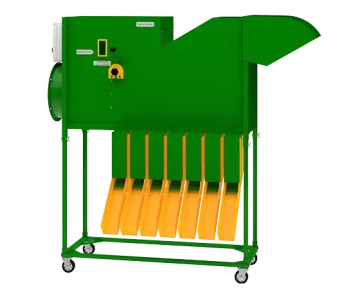
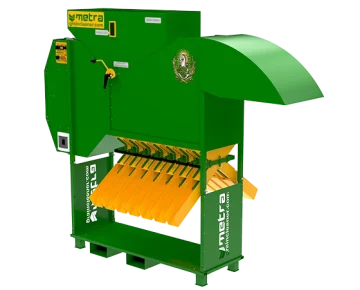

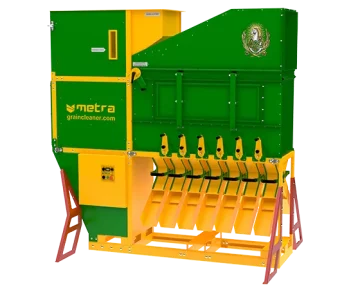


According to USDA (National Agricultural Statistics Service), the wheat harvest in the U.S. in 2025/26 will be a record one. If there are no unexpected climate changes, farmers will collect 10% more wheat than in the previous marketing year.
The expected price for this crop is $5.30 per bushel. However, only grain quality ensures the highest value. The good news is—quality can be improved.
Below, we explain how quality grain cleaning differs from regular cleaning and why sixth-generation machines should be used in the field.
Four Factors That Affect Grain Quality
Even our ancestors knew that clean, dry grain is better—many thousands of years ago, crops were always winnowed in the wind and dried. The first hand-operated winnowers began to be used in the early 19th century, and it was, without exaggeration, a technological breakthrough.
Today, systems for removing any dirt from grain crops are improved every 2–3 years. For example, the most modern video cameras and artificial intelligence are key parts of the quality that Metra grain cleaning systems guarantee.
Of course, no one stores or sells grain that contains soil, sand, stones, weeds, or other visible heavy trash. But besides these, grain quality—and therefore its market price and storage ability—is affected by:
- Other contamination, like animal or insect waste, dust, wild seeds, etc.;
- Mycotoxin infection of the plants;
- Uneven fractions—not a critical issue, but it does affect product quality evaluation;
- Damaged grain—most often seeds get cracked during harvest or post-harvest processing. Seed cleaners of older generations can also injure grain.
All these factors are natural—and each has its cost. If a bushel must be sold 3–5% cheaper—the lost profit may reach thousands of dollars.
Mycotoxin Danger
Mycotoxins can cause the most financial problems for farmers. Timely and regular chemical treatment of the land reduces the risk of fungal diseases, but does not eliminate it.
According to Randox Food, in 2024 the average number of fusarium mycotoxins in grain in the U.S. rose to 8.3 per sample, compared to 5.3 in 2023. The reason was heavy rainfall, which created ideal conditions for fusarium mold. The total mycotoxin risk rating rose significantly—from 122.7 in 2023 to 201.6 in 2024.
For example, in 2023, 76% of corn samples contained fumonisin, and 60% of finished feed had more than one mycotoxin.
Even a small percentage of contaminated grain lowers its grade, forcing sellers to accept very low prices. Such grain can’t be exported—many countries strictly control mycotoxin levels in food.
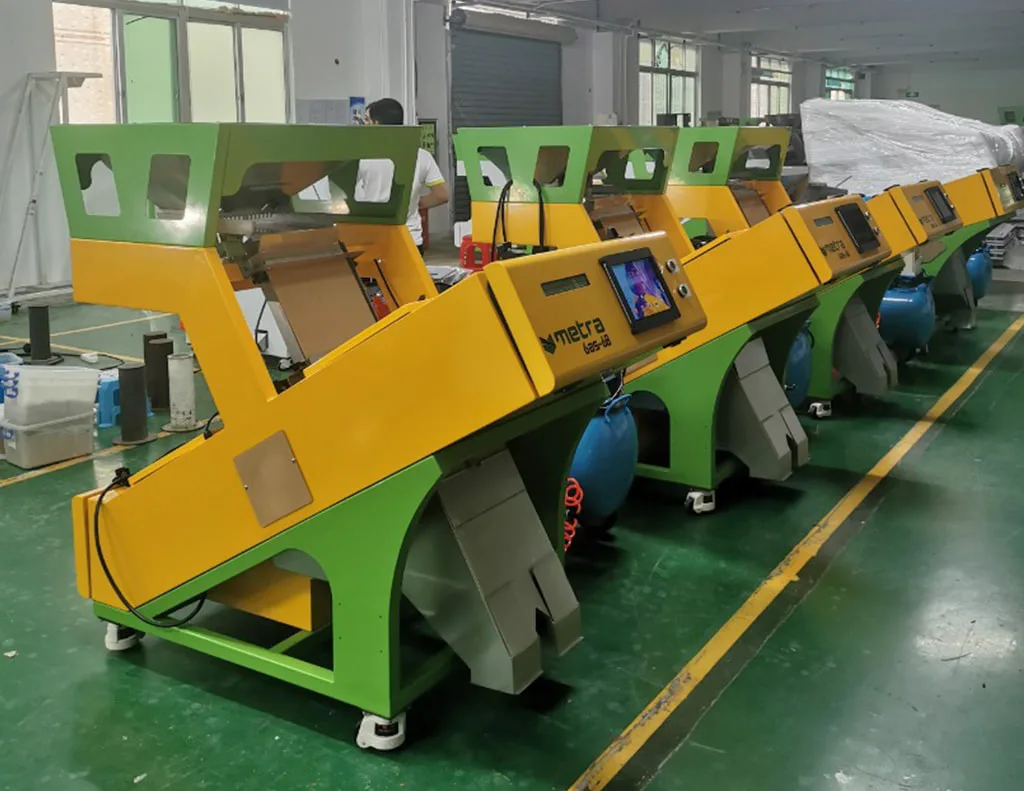
Modern Grain Sorters: A Smart Production Solution
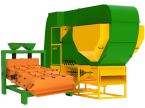
One METRA machine can replace 3–4 older machines in a single production line. One of its key features is the ability to detect fungus-infected grain. For example, peas damaged by Bruchus pisorum or wheat attacked by vomitoxin or fusarium.
In one technological pass, the machine:
- Cleans grain from heavy trash,
- Cleans grain from light trash and dust,
- Detects and removes damaged grains,
- Detects and removes grains infected with mycotoxins,
- Sorts seeds by relative density,
- Dries the grain up to 2% in one pass,
- Can sort by color—if needed,
- Sorts grain into 3–5 independent fractions, depending on your settings.
A new-generation gravity grain cleaner is more than just “a motor with a screen.” It’s a computerized system that:
- Has a large knowledge base and can learn—the database is constantly updated, and the software upgrades automatically;
- Works fast and gently, selecting top-quality grain based on the owner’s settings;
- Cleans both tiny seeds like poppy and large, multicolored beans with equal quality.
Another benefit of this technology is energy efficiency. Metra uses:
- From 0.75 kWh for 200 bushels/hour (5 tons/hour),
- Up to 22 kWh for 8000 bushels/hour (200 tons/hour).
Instead of a Conclusion
A sixth-generation grain cleaner is an investment that pays off within one or two seasons—depending on how much grain passes through it.
You quickly get back every dollar spent—and also earn a reputation as a reliable supplier of high-quality grain.
Not sure which grain cleaner is right for you?
Contact us now for expert advice and find out how you can improve your grain quality and market value with Metra.
FAQ
What affects grain quality?
Good grain is clean and dry. At minimum, it should not contain heavy or light trash, dirt, or mycotoxins. For better grain quality, it should also be undamaged and uniform in size.
How to check grain quality?
Grain quality is officially evaluated by professional labs that do chemical tests—for mass, protein percentage, mycotoxins, etc. But for basic evaluation, visual inspection is enough. Quality grain = good-looking grain: same shape, size, color, shine, and no foreign smells.
How are grain cleaning and sorting machines classified?
Experts classify grain machines by how they work and their design. There are:
Pre-cleaning separators that remove heavy trash,
Sieve, aerodynamic, and trieur machines for light trash,
Grain dryers and calibrators.
One Metra machine does all of this at the same time.